


3/27/26
大久野島のウサギは本当に可哀想なのか?
島を初めて訪れた人はその多くがその大久野島の闇に気づかない。私もそうだった。
可愛いウサギが沢山いて自分に群がる様子に興奮する。それがあるからこそ島の人気が衰えることはないのだろう。しかも可愛いだけの写真をSNSで見れば当然魅力的な場所だと思うのも無理はない。
人によっては訪れるタイミングで最初からその深い問題に気づく。何度も行ってからその酷さに気付き愕然とする人もいる。私達は長期滞在することで島で何が起こっているのかを平日の早朝、土曜日の夜、連休中、天気の悪い日などの全て、何週間も目撃してきて大久野島の実態を把握した。
島のウサギがきちんと管理されてると思ってる人がほとんどだ。むしろ管理されてないなどと疑う理由もないだろう。
管理されてないとわかって観察する島のウサギ達は多くの人に全く違った印象を与える。
特に自分でウサギを飼っている人達は信じがたいと困惑した表情を見せる。
それでも狭いケージの中で暮らすウサギに比べれば自由に暮らせていいのではないかと思う人は多い。そう思えるのはウサギが健康で走り回ってたり、ウサギ同士で仲良くしてる時だ。
この一見平和で幸せそうに見える光景を見て大久野島のウサギは可哀想な存在ではないと断言する人も多い。
その反面、私達にように病気や怪我をしたウサギを数知れず目にして、そのウサギ達が苦しみに耐えている様子を持続的に見ながら亡くなっていく過程を目撃してしまうと大久野島の罪の深さが理解できるようになる。残酷極まりないと言わざるえない状況だ。
死んでゆく短命なウサギ達は自然淘汰で命を失うのとは違う。自然の中で生き抜く身体能力もない家ウサギにケアもなしに健康で過ごす事を期待する事自体不可能だ。家ウサギに自然の中で自然に飲み食いできない土地で暮らせと言ってるのと同じだ。貴方のペットウサギが大久野島で暮らす事を想像してみてほしい。絶え間ないテリトリー内外での争い、力関係で誰が食べれて誰が食べれないかが決まる環境。病気や怪我になっても誰にも病院に連れて行ってもらえず、病いは静かに進行しやがて誰にも知られず亡くなる命。
いくら死のうとも後からどんどん産まれてくるウサギ達。見ようによってはいつも幸せに自由に暮らすウサギがいっぱいだと思われる大久野島。
その錯覚こそが大久野島のウサギの待遇改善の運動に繋がらない理由ではないかと絶望感を感じる思いである。
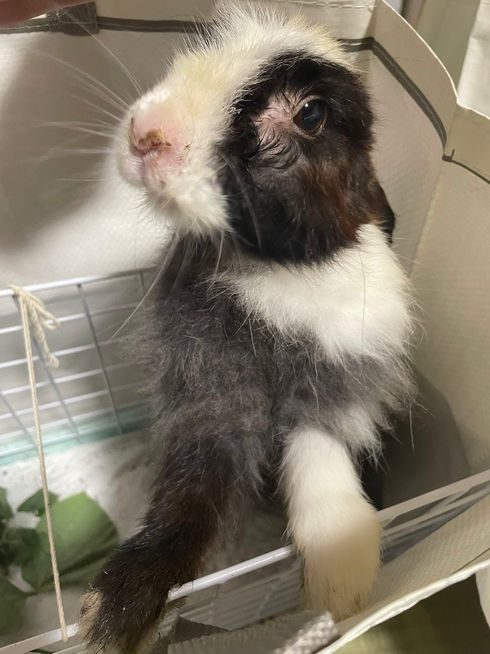
Pic 1: 重病になって他のウサギ達から逃げて暮らすウサギ
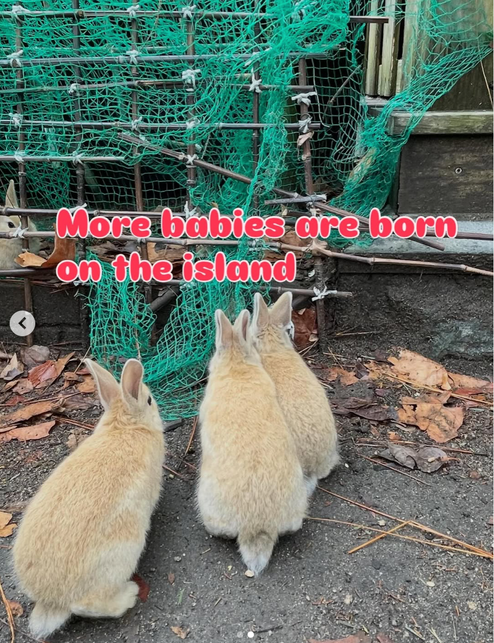
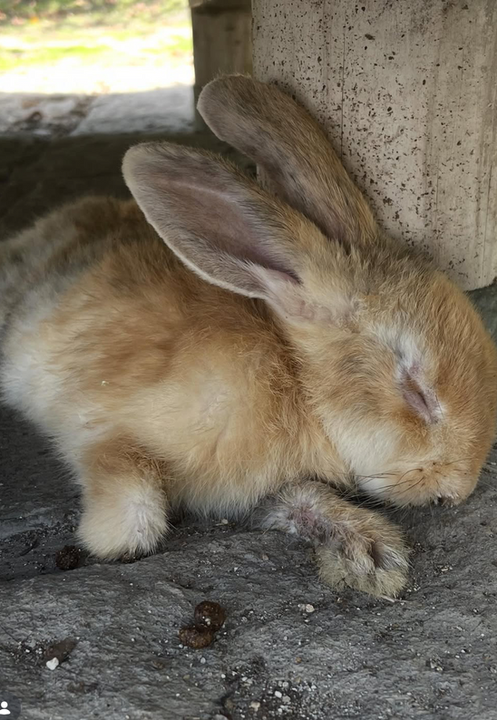
Pic 2: どんどん産まれ続ける子うさぎ達。
Are the Rabbits of Okunoshima Truly Pitiful?
Many first-time visitors to the island fail to notice the "dark side" of Okunoshima. I, too, was once among them.
People are thrilled by the sight of so many adorable rabbits flocking around them. It is precisely this experience that likely ensures the island's popularity never wanes. Furthermore, when one sees nothing but photos of cute rabbits on social media, it is entirely understandable—and indeed, only natural—to assume the place is a charming and idyllic destination.
Some visitors, depending on the timing of their trip, recognize the deep-seated problems from the very moment they arrive. Others visit repeatedly before finally realizing the severity of the situation, leaving them utterly aghast. By staying on the island for extended periods—witnessing events unfold over the course of several weeks during early weekday mornings, Saturday nights, long holiday weekends, and even on days with inclement weather—we were able to grasp the true reality of Okunoshima.
Most people assume that the island's rabbits are being properly managed. Indeed, they would have no reason to suspect otherwise.
However, when one observes the rabbits with the knowledge that they are *not* being managed, they present a completely different impression—one that comes as a shock to many.
In particular, those who keep rabbits as pets often wear expressions of bewilderment and disbelief.
Even so, many people still argue that living freely outdoors is surely preferable to being confined within a cramped cage. This sentiment, however, tends to arise only when the rabbits appear healthy—running about energetically or interacting harmoniously with one another.
Observing this seemingly peaceful and happy scene, many are quick to assert that the rabbits of Okunoshima are not, in fact, pitiful creatures.
Conversely, for those like us—who have witnessed countless sick and injured rabbits, and who have endured the agonizing experience of watching them suffer in pain as they slowly succumb to death—the true depth of Okunoshima's moral failing becomes painfully clear. It is a situation that can only be described as utterly cruel.
The short-lived rabbits dying on the island are not simply falling victim to "natural selection." It is fundamentally impossible—and indeed, absurd—to expect domestic rabbits, which lack the physical constitution to survive in the wild, to remain healthy and thrive without any form of care or intervention. It is tantamount to telling a domestic rabbit to live in the wild—in an environment where it cannot naturally forage or drink as it would in its natural habitat. I ask you to imagine your own pet rabbit living on Okunoshima Island. Picture an environment characterized by ceaseless territorial conflicts—both within and outside established boundaries—where a rigid power hierarchy dictates who gets to eat and who does not. Imagine falling ill or sustaining an injury, yet having no one to take you to a veterinary clinic; where sickness progresses silently, and a life eventually fades away, unnoticed by anyone.
No matter how many perish, new rabbits are born in a ceaseless stream to take their place. To the casual observer, Okunoshima might appear to be an island teeming with rabbits living happily and freely at all times.
It is precisely this illusion, I fear—with a sense of utter despair—that serves as the very reason why efforts to improve the welfare of the rabbits on Okunoshima have failed to gain traction.
Pic 1: A severely ill rabbit, living in isolation to escape from the other rabbits.
Pic 2: Baby rabbits, continuing to be born in endless succession.

3/20/26 (ビデオは2匹が松坂さんをテリトリーから追い出そうとした最初の頃)
私たちが初めて大久野島に行った2013年はウサギの数はゆうに1000は超えていたに違いない。現在の数が400というのなら、少なくとも今の3倍以上の数はあったように感じる。(ウサギの数はある一定数を超えると数えることが不可能だと思う)
島を回るとあっちこっちに水桶が置いてありサインもあった。まるできちんと管理されている、動物が自由にできる場所のように見えた。後々になって残飯拾いも給水も糞の掃除も頻繁に訪れる観光客によるもので、休暇村も竹原市も、この島を管理するという環境省もウサギに関しては完全にノータッチであることを知ることになる。
耳がなかったり、目がなかったりするウサギは今よりはるかに多かったのを覚えている。ウサギの数が多かったので怪我をしたウサギの数も当然多い。エサに対する執着が強く、エサにありつけないウサギもいるのではないかと思われた。 観光客がどんなにエサを撒き散らせてもウサギの数が多いので残飯が残ることはほとんどなかった、と記憶している。現在はウサギの数に比べて観光客が多すぎて多すぎるエサの日は残飯となって残る。
縄張り意識の強いウサギを同じ場所に放し飼いにするとどうなるか? 当然、自らのテリトリーを築き生活する。 テリトリーに属さないウサギは襲われ、噛みつかれ、傷つく。 その多くが感染症を起こし一定の時間を経て死亡する。
現在は400匹くらい生存すると言われているが果たして喧嘩は無くなっただろうか?答えはNOである。喧嘩で怪我をしたウサギは少なく見えるかもしれないがそれは全体数が少ないからであり、ウサギの喧嘩で傷つくウサギのパーセンテージは昔と変わらないように思える。ウサギの喧嘩は大なり小なり毎日、1日を通して起こる。私が過去2−3年に目撃したケンカはシビアで1匹がもう1匹を5分近く追い回し(猛スピードで)最後は1匹が身体から血を流して息絶えた。死闘だった。別の時には私のプロフィールにピン付けした松坂さんというウサギが亡くなる前年に2匹のウサギから執拗に追われ(ビデオはケンカをし始めた最初の頃)、噛みつかれ、そのケンカを止めようとした人が手に大きな怪我をした。ウサギの歯はそれだけ鋭いのだ。怪我をした松坂さんはその怪我から2週間ほど行方がしれなくなったがその後、回復して戻ってきた。ウサギのケンカから何とか生き延びた松坂さんも結局、最後は人災で亡くなった。その顛末は投稿を読んでいただきたい。
2月に救出され3月に亡くなったサキちゃんもあの巨大膿瘍の始まりはケンカによる咬み傷であることは間違いない。
島に行ったらコブのようになった膿瘍のあるウサギを見つけられるはずだ。治療されないとそのウサギは確実に命を落とすだろう。
餌やりだけがウサギに問題を起こしているのではない。ウサギのケンカも同様に問題を引き起こしているのだ。
誰も責任を取らない島で縄張り意識の強い動物を放し飼いしたらどうなるか? それは今でも散見される状態が起こるの事に不思議はない。
(The video captures an early instance where two rabbits attempted to drive Mr. Matsusaka out of their territory.)
When we first visited Okunoshima in 2013, the rabbit population must surely have exceeded 1,000. If the current count stands at 400, it certainly felt as though there were at least three times that number back then. (I suspect that once the rabbit population surpasses a certain threshold, it becomes impossible to count them accurately.)
As we toured the island, we noticed water basins placed here and there, accompanied by signage. It appeared, to all intents and purposes, to be a well-managed sanctuary where animals were free to roam. It was only later that we learned the truth: the scavenging of scraps, the replenishment of water, and the cleanup of droppings were all carried out by frequent visitors—while the Kyukamura resort, the city of Takehara, and even the Ministry of the Environment (which ostensibly manages the island) remained completely hands-off regarding the rabbits themselves.
I distinctly remember that there were far more rabbits missing ears or eyes back then than there are today. Given the sheer size of the population, it was only natural that the number of injured rabbits was correspondingly high. Their desperation for food was intense, and one couldn't help but suspect that some rabbits were simply unable to secure any sustenance at all. I recall that no matter how much food tourists scattered, the rabbit population was so dense that virtually no scraps were ever left behind. Nowadays, however—with the number of tourists far outweighing the rabbit population—days of excessive feeding often result in uneaten scraps being left to rot.
What happens when rabbits with strong territorial instincts are allowed to roam freely in a shared space? Naturally, they establish their own territories in which to live. Any rabbit that strays outside its designated territory is liable to be attacked, bitten, and injured. Many of these injured rabbits subsequently contract infections and, after a period of suffering, eventually succumb to their wounds.
Although the current population is said to hover around 400, has the fighting actually ceased? The answer is a resounding "No." While the *absolute number* of rabbits injured in fights may appear lower now, this is merely a reflection of the smaller overall population; the *percentage* of rabbits sustaining injuries due to territorial conflicts seems to remain exactly the same as it was in the past. Rabbit fights—whether minor skirmishes or major battles—occur daily, at various times throughout the day. One fight I witnessed over the past two or three years was particularly brutal: one rabbit chased another at breakneck speed for nearly five minutes until, in the end, the victim bled out and died. It was a fight to the death. On another occasion—the year before he passed away—a rabbit named Matsusaka (whose story is pinned to my profile) was relentlessly pursued and bitten by two other rabbits. (The video I posted captures the initial moments of that altercation.) When someone attempted to intervene and break up the fight, they sustained a severe injury to their hand. That is just how sharp a rabbit's teeth are. Matsusaka, injured in the attack, went missing for about two weeks but eventually recovered and returned. Yet, despite having miraculously survived that violent rabbit fight, Matsusaka ultimately met his end due to human error. I invite you to read my previous posts to learn the full details of that tragic outcome.
It is also beyond doubt that the massive abscess that ultimately claimed the life of Saki—a rabbit rescued in February who passed away in March—originated from a bite wound sustained during a fight.
If you visit the island, you are bound to encounter rabbits suffering from abscesses that have swollen into grotesque lumps. Without medical treatment, those rabbits are virtually certain to lose their lives.
It is not merely the feeding of the rabbits that creates problems; the rabbits' own fighting causes just as many issues.
What happens when animals with strong territorial instincts are allowed to roam free on an island where no one takes responsibility? It is hardly surprising that the chaotic conditions we witness there to this very day are the inevitable result.

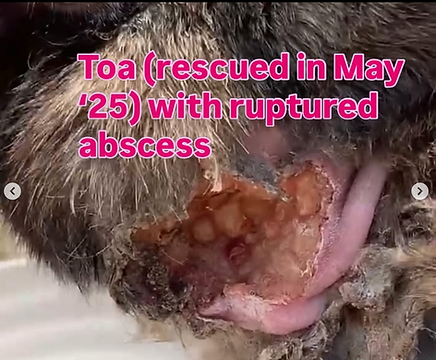


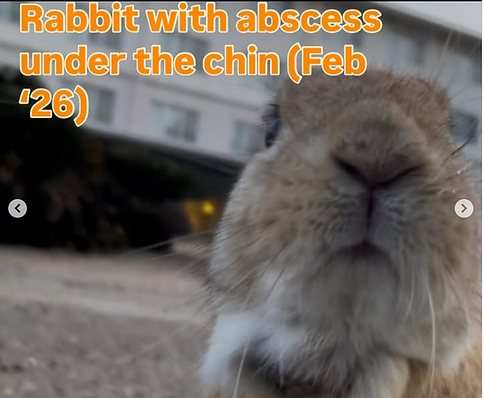

3/14/26 (写真は膿瘍で苦しんだ大久野島のウサギ達)
2/18/26に救出された背中に巨大膿瘍を持った桜季(サキ)ちゃんは今日も病院で治療を頑張っている。
サキちゃんの病状を思うと、今までも大久野島で見た膿瘍を持った多くのウサギ達の事が思い出される。
ウサギの膿瘍は獣医によれば犬猫の膿瘍とは全く異なり、非常に深刻な問題である。粘り気のあるチーズのような白い膿瘍はその分厚い膜が破れても自然に排膿されにくく、洗浄、抗生剤の投与が不可欠だ。
完治が困難で再発の可能性が高く、身体の別の部分へ飛ぶこともある厄介な症状だ。根本治療は膿瘍を皮膜ごと除去する外科手術で自然治癒はありえないそうだ。
治療されない場合、菌が全身に巡りやがて死に至る。
縄張り意識の強いウサギをあのように放し飼いにすれば当然、ケンカは頻繁に没発する。それはエサが十分あってもそれは変わらない。
大久野島のウサギの場合、顔や喉以外の身体にある膿瘍は咬み傷から起こることが大半であろう。
顔、顎にできる膿瘍は不正咬合による歯根の炎症やパスツレラ菌などの感染によるものだ。放っておくと菌は骨にまで及び骨髄炎になる。
言われてみれば顎の下にコブのあるウサギは今まで何匹も見てきた。ケンカで顎の下に膿瘍ができるのは不自然な気もした。かつては腫瘍だと思っていた多くのケースは今となってみると膿瘍だったのかもしれず、その症例をいくつも目撃してきた。偏りがちなダイエットの大久野島のウサギは当然、歯の問題も引き起こす。
ウサギのケンカは自然の中で起こることでしょうがないという人がいるが私はそうは思わない。
大久野島にウサギがいること自体が自然でもなんでもないからだ。遺棄されたウサギが繁殖しただけだ。
国立公園である大久野島はウサギで有名になった観光地だ。その観光地でケアもされず放置されるウサギはネグレクトに十分値する環境に置かれている。病気になろうが怪我をしようが手当をする管理体制すら存在しない。無駄に死んでいくだけの観光の使い捨て道具だ。
動物福祉に疎い日本とはいえ、こんなことが許されていいのか?
ケアするつもりがないのなら、明日からでもTNR(去勢、避妊手術)をすべきだ。負の連鎖は断つべきだと思う。
(Pictured: Rabbits on Okunoshima Island that have suffered from abscesses)
Saki—a rabbit rescued on February 18, 2026, with a massive abscess on her back—continues to bravely undergo treatment at the veterinary hospital today.
Reflecting on Saki’s condition brings to mind the many other rabbits I have seen on Okunoshima Island over the years that were afflicted with abscesses.
According to veterinarians, rabbit abscesses are entirely different from those found in dogs and cats; they constitute a far more serious medical issue. The thick, cheesy, white pus characteristic of these abscesses rarely drains naturally, even if the tough outer membrane ruptures; consequently, thorough flushing and the administration of antibiotics are absolutely essential.
It is a troublesome condition that is difficult to cure completely, carries a high risk of recurrence, and can even metastasize to other parts of the body. I am told that the only definitive cure involves surgical removal of the entire abscess—including its encapsulating membrane—and that natural recovery is simply not possible.
If left untreated, the bacteria will spread throughout the rabbit's entire system, eventually leading to death.
When rabbits—creatures with a strong territorial instinct—are allowed to roam freely in such a manner, it is inevitable that fights will break out frequently. This remains true even when there is an ample supply of food.
In the case of the rabbits on Okunoshima Island, the vast majority of abscesses found on the body—excluding the face and throat—are likely the result of bite wounds sustained during these altercations.
Abscesses that form on the face or jaw, however, are typically caused by root infections resulting from dental malocclusion, or by bacterial infections such as *Pasteurella*. If left untreated, the infection can penetrate deep into the bone, leading to osteomyelitis.
Now that I think about it, I have indeed seen many rabbits over the years with lumps beneath their jaws. At the time, it struck me as somewhat unnatural for an abscess to form in that specific location solely as a result of fighting. Many of the cases I once assumed were tumors may, in retrospect, have actually been abscesses—a condition I have evidently witnessed countless times. Given their often unbalanced diets, it is hardly surprising that the rabbits on Okunoshima Island frequently suffer from dental health issues.
Some people argue that fighting is simply a natural occurrence among rabbits living in the wild and that it is therefore unavoidable; however, I do not share that view. The very presence of rabbits on Okunoshima is, in itself, neither natural nor organic. They are simply abandoned animals that have bred.
Okunoshima, a designated national park, has become a tourist destination famous for its rabbits. Yet, within this tourist hotspot, the rabbits are left to fend for themselves without any care—subjected to conditions that amount to sheer neglect. There is not even a management system in place to provide medical attention should they fall ill or suffer injuries. They are treated merely as disposable props for tourism, left to die in vain.
Even for Japan—a country often considered lacking in awareness regarding animal welfare—should such a situation truly be tolerated?
If there is no intention to provide care, then a TNR (Trap-Neuter-Return) program—involving spaying and neutering—should be implemented immediately. I firmly believe that this vicious cycle must be broken.
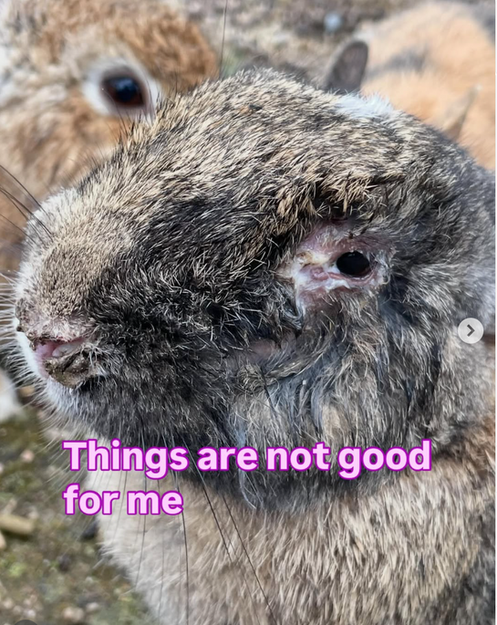
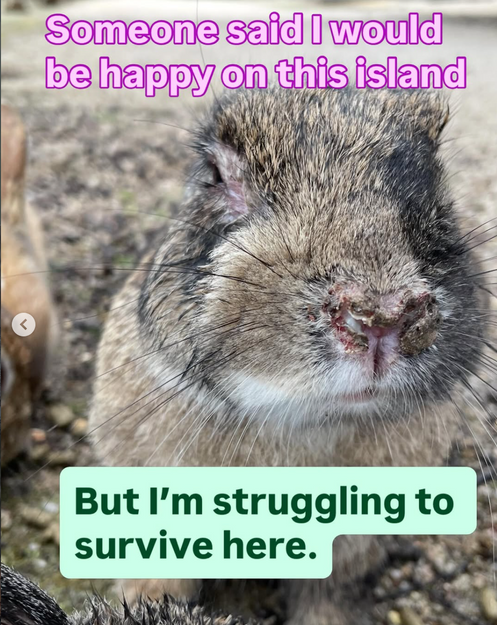
2/25/26
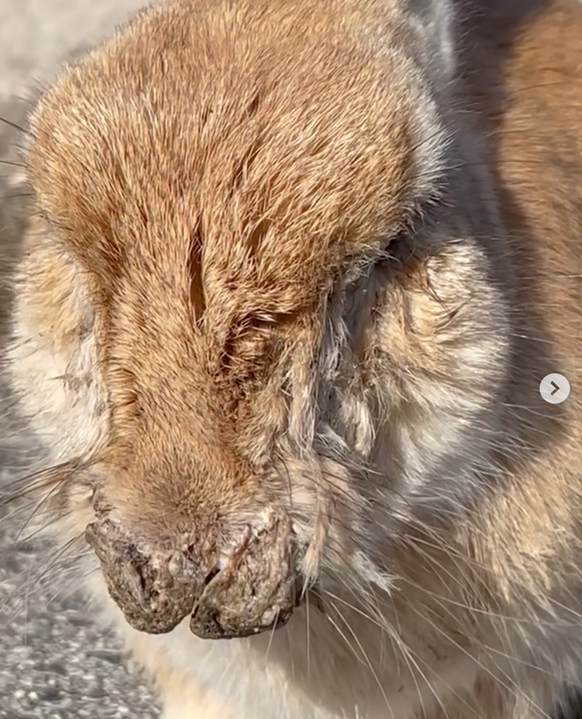
ボロボロになった病気のウサギ。
多分1歳にはなっているだろうか?
かつては健康で走り回れたのかもしれない。今は追われる事が多く、食べ物を確保するのに必死だ。
その日、地面からハイタッチし続けてももらえるチャンスが少ないと思ったのか色んな食べ物が入った私のバッグがあったテーブルの上まで登ってきた。たまたま他のウサギ達が地面で食べるのが忙しくこのウサギの存在に気づいておらずこのチャンスを逃してはこのこの仔に十分あげる事はできないと思った。
テーブルに登ったウサギの顔は私の顔の目の前だ。その顔は目も鼻も感染で酷い状態だった。私は急いでバナナを取り出した。剥いて差し出すと貪るように食べ始めた。初めて食べるものなのだろうか?その食べ方は涙が出るほど哀れだった。いっぱいあげてはいけないと思いながらもこの先長く生きるとは思えないそのウサギに私は食べたいだけ食べさせてあげようと思った。見ていてただただ涙が出てきた。
どうしてこんなになるまで誰にもケアされず放置されるのだろう?
これが大久野島で生まれた宿命だとでも言うのだろうか?
ふざけるな!
こんな仕打ちを受ける島のウサギ達の状況を決して受け入れてはいけない。
何度でも何度でも環境省に訴え続けようと思わずにはいられないウサギがそこには居た。
A ailing rabbit with tattered coat.
I wonder if she has turned a year old yet?
Perhaps, once upon a time, it was healthy enough to run and frolic freely. Now, however, she is frequently chased away and struggles desperately just to secure a morsel of food.
On that particular day—perhaps sensing that its chances were slim if it merely kept reaching up from the ground—she climbed all the way onto the table where my bag sat, filled with various treats. As it happened, the other rabbits were too busy feeding on the ground to notice this little one’s presence; realizing that if I let this moment pass, I might never get another chance to give it a proper meal, I seized the opportunity.
The rabbit that had climbed onto the table brought its face right up to mine. Her eyes and nose were in a terrible state—ravaged by infection. I hurriedly pulled out a banana. As I peeled it and held it out, the rabbit began to devour it voraciously. Was this the first time she had ever tasted such a thing? The way she ate was so pitiful that it brought tears to my eyes. Although I knew I shouldn't give it too much at once, looking at this rabbit—which I doubted would survive much longer—I decided to let her eat as much as her heart desired. Watching it, I simply couldn't hold back my tears.
Why? Why is it left neglected and uncared for until she reaches such a wretched state?
Are we really supposed to accept this as the "fate" of those born on Okunoshima Island?
Don't give me that nonsense!
We must never, ever accept the reality of the rabbits on this island being subjected to such cruel treatment.
There, before me, stood a rabbit that compelled me to vow—time and time again—that I would never cease appealing to the Ministry of the Environment on their behalf.

Left side of face

Right side of face
2/22/26
誰も命の責任を取らない大久野島の環境の中で餌やり水やりをすることは正当化されるのか?
それは本当にウサギの為になっているのだろうか?
大久野島は環境省の管理下でありながら環境省はウサギの管理はしない、と明言している。管理しないというのはもちろんケアなどしないということである。
それならば下記の問題の解決策は何なのか?
- ウサギ達を分別、管理なしにケンカによる怪我はなくならない
- 餌やりを禁止にしない限り、不適切な餌による病気、死亡はなくならない
- 人とウサギの距離をおかない限り踏み潰し事故や抱っこからの落下事故による怪我、死亡はなくならない
- 感染症のウサギを健康なウサギから隔離しなければみんな病気になり死亡は免れない
- 避妊、去勢しない限りウサギの数は増え続ける
ウサギの管理なしにウサギを使った観光業が正当化されるとは思わないが、一体どのような経緯で餌やりや水桶の設置が許されるに至ったのだろう?
私は本当の意味でのウサギの管理のない状況のもとでの餌やりも水桶の設置も反対だ。
究極的にウサギの為にはならない。
昔ほど積極的に餌をあげることはなくなったものの、それでもお腹を空かせているウサギを目の前にして餌をあげないのは残酷だと感じ餌をあげる私自身も罪深いのは自覚している。
これまでの環境省の一貫した姿勢を見るとウサギの管理に移行するとは考えにくい。
それならば餌やりも水桶の設置もやめてほしい。現在の状況のままでは負の連鎖は半永久的に続くだろう。
このままでは島のウサギの命は文字通り、使い捨てだ。
In the environment of Okunoshima—where no one takes responsibility for the lives of the animals—can the acts of feeding and providing water truly be justified?
Are these actions genuinely in the best interest of the rabbits?
Although Okunoshima falls under the jurisdiction of the Ministry of the Environment, the Ministry has explicitly stated that it does *not* manage the rabbits. By "not managing," they naturally mean that they provide no care whatsoever.
If that is the case, what are the solutions to the following problems?
- Without sorting and managing the rabbits, injuries resulting from fights among them will never cease.
- Unless feeding is prohibited, illness and death caused by inappropriate food will never cease.
- Unless a safe distance is maintained between humans and rabbits, injuries and fatalities caused by accidental trampling or falls while being held will never cease.
- Unless rabbits carrying infectious diseases are isolated from healthy ones, the entire population will fall ill, and deaths will be inevitable.
- Unless spaying and neutering are implemented, the rabbit population will continue to grow unchecked.
I do not believe that a tourism industry centered on rabbits can be justified without proper rabbit management; yet, I find myself wondering: how exactly did the practice of feeding and setting out water troughs come to be permitted in the first place?
I am opposed to both the feeding of rabbits and the installation of water troughs in a situation where there is no *true* management of the animals.
Ultimately, these actions do not serve the rabbits' best interests.
Although I no longer feed them as actively as I once did, I am fully aware that I, too, am culpable; when confronted with a hungry rabbit right before my eyes, I still feel that withholding food would be cruel, and so I feed them—a sin I acknowledge.
Given the Ministry of the Environment's consistent stance thus far, it seems highly unlikely that they will shift toward actively managing the rabbits.
In that case, I implore them to put an end to both the feeding and the provision of water troughs. If the current situation persists, this vicious cycle will continue almost indefinitely.
As things stand, the lives of the rabbits on this island are—quite literally—disposable.
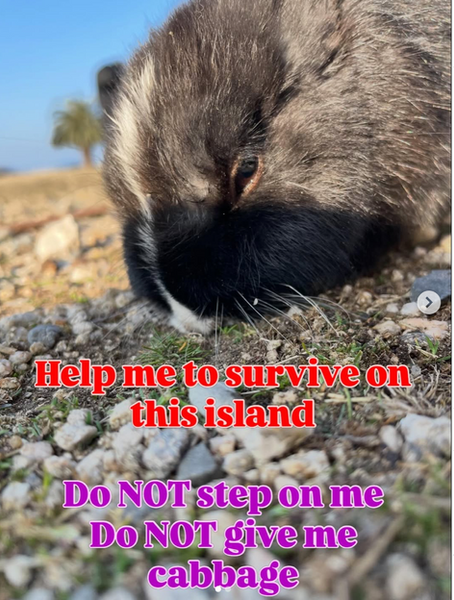

2/22/26,
It’s almost like a roll of dice for someone like this little one to survive on this island.
こんなに小さな命がこの島で生き残れるかはほぼ無謀な賭けと同じだと思う。

2/19/26
貴方は大久野島のことをどれだけ知っていますか?
ウサギがいっぱいいて楽しい場所?
おそらくそんなイメージしかないでしょう。
大久野島のウサギは誰にも管理されておらず事実上の放し飼いです。
ウサギ達は穴を掘ったり茂みの奥深くで寝泊まりします。暑くても寒くても外気の温度からそこまで守られません。酷暑、厳冬期に病状が悪化する事は避けられません。シェルターのような場所もありません。
ウサギ達は観光客からもらう餌が頼りです。
食べてはいけないパンやお菓子も観光客が与えれば食べます。大好きな野菜も食べますが食べ過ぎで体調を壊し死に至ることは往々にして起こります。子うさぎに至ってはすぐ鬱滞を起こし貴方が帰った後に亡くなります。
餌欲しさに足にまとわりつくウサギを間違って踏んでしまう人もいます。ごめんね、で済む話ではないのです。踏まれた多くのウサギは骨折します。傷ついたウサギは群れから追われ餓死するか傷から感染症を起こし亡くなるのです。
ウサギ達は習性からテリトリーを作りほとんどがそのテリトリー内で暮らしています。支配的地位にあるウサギは餌を誰よりも食べようとして弱い立場のウサギを威嚇、時には攻撃します。怪我をしても誰も手当てをする人はいません。
ウサギ達は子供によく追いかけられます。追いかける過程で踏み潰し怪我をさせます。踏まれたり抱き上げられて落とされて命を落とすウサギは後を断ちません。私は子供による行為で亡くなったウサギを数多く目撃しています。踏まれて即死するウサギもいるのです。
ふれあい動物園のノリで訪れる観光客が圧倒多数の中、ウサギの命を一体何人の人が気にかけているでしょうか?
観光客に動物管理ゼロの場所に責任感を持って振る舞えと期待すること自体、無理でしょう。
ウサギの犠牲で成り立つ大久野島観光業には改善されるべき点が多すぎます。
竹原市や環境省に貴方の意見を送ってください。
私のプロフィールの中のリンクに
Voice to Takehara city (竹原市への声)
Voice to Ministry of Environment(環境省への声)
環境省(MOE) Email address アドレス:
REO-CHUSHIKOKU@env.go.jp
があります。
多くの声が現状を変えていく力になります。
How much do you really know about Okunoshima?
Is it just a fun place filled with rabbits?
That is likely the only image you have of it.
The rabbits on Okunoshima are not managed by anyone; they are, in effect, left to roam wild.
The rabbits dig burrows and sleep deep within the thickets. Whether the weather is hot or cold, they have little protection from the elements. It is inevitable that their health will deteriorate during periods of extreme heat or severe winter cold. There are no shelters or safe havens for them.
The rabbits rely entirely on food given to them by tourists.
They will eat anything tourists offer—even bread and sweets that are harmful to them. They also love vegetables, but it is all too common for them to fall ill—sometimes fatally—from overeating. Baby rabbits, in particular, can quickly develop gastric stasis and pass away shortly after you have left the island.
Some visitors even accidentally step on rabbits that are clinging to their feet in search of food. This is not a matter that can be resolved with a simple "I'm sorry." Many rabbits that are stepped on suffer broken bones. Injured rabbits are often driven out of the group; they either starve to death or succumb to infections resulting from their wounds.
Instinctively, the rabbits establish territories, and most spend their entire lives within those boundaries. Dominant rabbits attempt to monopolize the food supply, intimidating—and sometimes even attacking—weaker individuals. If a rabbit gets injured, there is no one there to provide medical care.
The rabbits are frequently chased by children. In the process of chasing them, children often trample and injure the animals. There is a ceaseless stream of rabbits that lose their lives after being stepped on, or after being picked up and subsequently dropped. I have personally witnessed numerous rabbits that died as a direct result of children's actions. Some rabbits are trampled and killed instantly.
Given that the overwhelming majority of visitors arrive with the mindset of visiting a petting zoo, how many people truly care about the lives of these rabbits? It is likely unrealistic to expect tourists to behave responsibly in a location where there is absolutely no animal management in place.
The tourism industry on Okunoshima—which relies entirely on the sacrifice of its rabbits—has far too many issues that need to be addressed.
Please send your feedback to the City of Takehara and the Ministry of the Environment.
In my profile, you will find links titled:
"Voice to Takehara City"
"Voice to Ministry of the Environment"
Ministry of the Environment (MOE) Email Address:
REO-CHUSHIKOKU@env.go.jp
The collective power of many voices is what drives change.

2/14/26
大久野島からの医療救出に対して反感を持つ人は往々にして島で掲げられたサインに言及する。
このサインがウサギ部会によって作られたのは随分昔のことだ。作られた時には医療救出など想定外だったはずだ。実際まともにこのサインの文言を信じた私達は多くのウサギを見殺しにしてきた。連れ出さないでくださいというのは単純に盗難を懸念する意味で作られたと思う。
2024年には医療救出をした方々と環境省に電話してこの事案に関して話をしている。
実際の返答は次のようなものだ。
Q:島から医療のためにウサギを連れ出してもよいか?
A: できないことではない
A: 不可能ではない
Q: 環境省としては治療のために連れ出してもよいと思ってるか?
A: 環境省はウサギの所有権を持たず、従って連れて行く人を止めることはできない。
A: 連れ出すことは公園法にも抵触しない
助けられる命を救う行動への誹謗中傷はやめてほしい。救出チームへの中傷を見て救出をためらう人、明かさない人がいるのはSNSが生み出した匿名による誹謗中傷が原因である。
命を救う行動は生易しいことでは決してない。でもそれでも助けたいと感じる程、傷病ウサギの数は多く、重症である事が少なくない。
大久野島は平和でウサギは幸せで改善など必要ないと本気で思ってるのだろうか?
大久野島のウサギを使った観光で収益をあげている人達に大久野島の是非をコメント、議論する権利はないと思う。
大久野島に来て病気や怪我のウサギ達をよく見てほしい。全く管理もされずケアも受けてない事実を知ったあとにウサギ達を見て貴方は本当に何も感じないだろうか?
プロフィールのリンクから竹原市と環境省へ意見が送れます
Voice to Takehara city
Voice to the Ministry of Environment
Email address for MOE: REO-CHUSHIKOKU@env.go.jp
Those who harbor animosity toward the medical rescue efforts on Okunoshima often cite the signs posted on the island.
It was a very long time ago that this particular sign was created by the Rabbit Committee. At the time it was made, medical rescues were surely an unforeseen scenario. In fact, because we took the wording of this sign at face value, we have effectively left many rabbits to die. I believe the instruction "Please do not take them off the island" was intended simply to address concerns regarding theft.
In 2024, I—along with others involved in medical rescues—contacted the Ministry of the Environment to discuss this matter.
Their actual response was as follows:
Q: Is it allowed to take rabbits off the island for medical treatment?
A: It is not something that *cannot* be done.
A: It is not impossible.
Q: Does the Ministry of the Environment consider it acceptable for rabbits to be taken off the island for treatment?
A: The Ministry of the Environment does not hold ownership rights over the rabbits; therefore, we cannot stop individuals from taking them.
A: Taking them off the island does not constitute a violation of the Natural Parks Act.
I implore you to cease the slander and defamation directed at those taking action to save lives that *can* be saved. The reason some people hesitate to undertake rescues—or choose to keep their rescue efforts private—is precisely because of the anonymous slander generated on social media.
The act of saving lives is by no means an easy undertaking. Yet, the number of sick and injured rabbits is so high—and their conditions so frequently severe—that we feel compelled to help them regardless of the difficulty.
Do people truly believe that Okunoshima is a peaceful paradise where the rabbits are happy, and that absolutely no improvements are needed?
I do not believe that those who profit from tourism centered around the rabbits of Okunoshima have any right to comment on—or debate the propriety of—the situation on the island.
I urge you to visit Okunoshima and take a good, hard look at the sick and injured rabbits there. Once you have faced the reality that they receive absolutely no management or care, will you truly feel nothing when you look at them? You can submit your feedback to Takehara City and the Ministry of the Environment via the link in our profile.
Voice to Takehara City
Voice to the Ministry of the Environment
Email address for MOE: REO-CHUSHIKOKU@env.go.jp

2/12/26
大久野島に関する誤解
大久野島(通称:うさぎ島)では、うさぎたちが自由に、幸せに暮らしている――そう語る人々がいます。
ですが、実際に彼らの暮らしぶりをその目で確かめたことはあるでしょうか?
島にいるうさぎたちを管理・世話する人間は、誰一人としていません。彼らは本来の野生うさぎですらなく、かつて飼育されていたペットうさぎが島に捨てられ、繁殖したその子孫たちなのです。この島を管轄する竹原市は、うさぎへの給水(時には給餌も)やゴミ拾いといった作業を、すべてボランティア任せにしています。うさぎたちが搾取されているのと同様に、ボランティアたちもまた、都合よく利用されているに過ぎないのです。
うさぎたちは過酷な天候に完全に無防備な状態で晒されており、病気、人間による不慮の怪我、そしてうさぎ同士の争いなどが原因で、その寿命は極めて短いものとなっています(おそらく1年〜1年半程度でしょう)。
環境省は、「うさぎたちの世話は行わない」という従来の姿勢を、今なお変えようとしていません。それにもかかわらず、国立公園としての管理方針に反してまで、竹原市がうさぎに餌を与えたり、給水用のボウルを設置したりすることは黙認しているのです。
その結果、不適切な食べ物や偏った食生活、人間に踏みつけられる事故、抱き上げられた後に落とされるといった人為的なミスにより、うさぎたちは次々と命を落としています。さらに、病気や怪我を負ったうさぎは、イノシシ、カラス、タカ、フクロウ、ヘビといった捕食者たちにとって格好の標的となってしまいます。彼らに生き延びる術など、どこにもないのです。
果たして、彼らは本当に幸せなのでしょうか? 私が13年間にわたり観察し続けてきた事実は、その真逆であることを物語っています。
彼らは単に放置され、この観光ブームの犠牲として虐げられているに過ぎないのです。
もしあなたがペットとしてうさぎや、あるいは犬や猫を飼っていたとして、灼熱の夏や凍てつく冬の最中に、一日中、一晩中、彼らを屋外に放置することなどできるでしょうか? 彼らの命がこれほど短くなってしまう理由が、これでご理解いただけたことと思います。
動物たちへの配慮を欠いたまま、彼らを搾取し続けるようなビジネスが、一体どうすれば正当化などできるというのでしょうか。
どうか、以下の窓口までご意見をお寄せください(海外からの圧倒的な圧力でもない限り、彼らが姿勢を改めることはないでしょう)。
リンクは私のプロフィール欄にも掲載されています。
環境省 中国四国地方環境事務所
メールアドレス:REO-CHUSHIKOKU@env.go.jp
竹原市
https://www-city-takehara-lg-jp.translate.goog/cgi-bin/inquiry.php/25?page_no=2049&_x_tr_sl=auto&_x_tr_tl=en&_x_tr_hl=ja
Myth about Ohkunoshima
Some people say rabbits are free and happy on Ohkunoshima (Rabbit Island).
Did you actually watch how they live?
There is no one managing these rabbits. They are not even wild rabbits, but offspring of dumped housed rabbits. Takehara City where this island is located depends on volunteers to provide water (and maybe food) for rabbits and pick up garbages. Volunteers are exploited as well just like rabbits are exploited.
Rabbits are completely exposed to harsh weather and their life span is extremely short (1-1.5 years maybe) due to disease, human caused injuries, fights among rabbits.
The Ministry has not changed their mind on their position that they will NOT take care of them. And yet, they allowed Takehara City to feed rabbits and water bowls to be placed despite their national park policy.
Consequently, rabbits die left and right due to wrong food, inappropriate diet, being stepped on, being dropped after holding them. They also make perfect target for predators such as boars, crows, hawks, owls & snakes once sick and injured. They do not stand a chance.
Are they really happy? My observation of 13 years proves it otherwise.
They are simply neglected and abused by this tourism.
Would you place your pet rabbits or even dogs and cats outside all day, all night in scorching summer and freezing winter? You can understand why they don’t get to live long.
I don’t see how they can justify any business exploiting these animals without care.
Please write to; (they will not change unless they get tremendous pressure from foreign countries)
Link is also in my profile
The Ministry of Environment, Chugoku Shikoku office
Email: REO-CHUSHIKOKU@env.go.jp
Takehara City
https://www-city-takehara-lg-jp.translate.goog/cgi-bin/inquiry.php/25?page_no=2049&_x_tr_sl=auto&_x_tr_tl=en&_x_tr_hl=ja
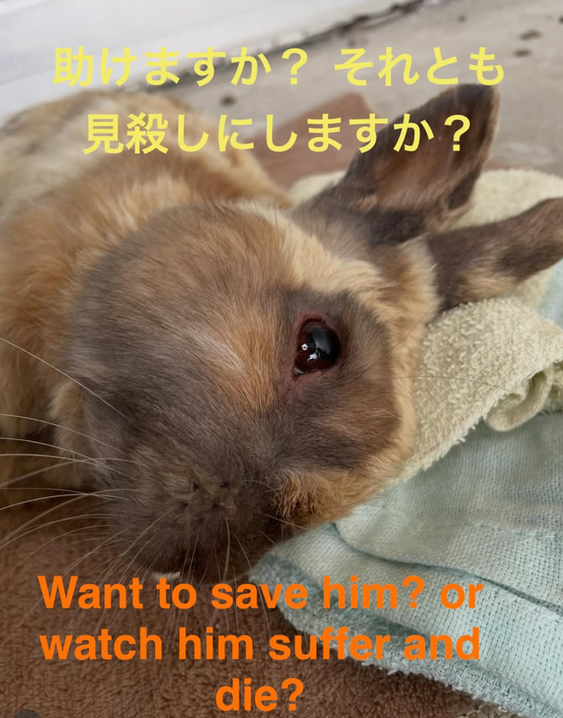
大久野島の悲劇
1年半経った今でも大久野島から医療救出に反対する人間が存在する。
治療しても亡くなったウサギがいるから連れ出しても意味がない、という言い分のようだ。
この19ヶ月の間に救出されたウサギ達はほぼ全員が重傷であったことは事実である。困難な治療を経て回復を遂げることができたウサギが存在したこと自体が奇跡に近かった。
それを、医療救出してもどうせ亡くなるんだから連れ出すな、というのは一体全体、どういう神経を持ち合わせてるのだろうか? 島に残されたままでは死を待つしかない命を一つでも救ってあげたいと何故思えないのだろうか?
回復を遂げたウサギ達は皆、新しい家庭で幸せに暮らしているのだ。どうしてそれを一緒に喜んであげることができないのだろう?
現地で未だ反対運動めいたことをし、同調する人間が複数の偽アカウントを駆使してSNSで多くの人が医療救出に反対していると思わせるような動きまでして反対する真の意図は何なんだろう?
もっと言わせてもらえれば、昔から変わらず現在も続いている島のあるまじき実態がそのままでいいと思っているのか?と逆に聞きたい。 本当に残酷な人達だと思う。 大久野島のウサギ達は哀れだ。こんなウサ活達(ボランティア)に病気や怪我を隠蔽され私物化のようにされている。
大久野島に明るい未来は見えない。
(写真は2024年6月のリトルボス)
2/4/26. Ohkunoshima tragedy
There are people who are lobbying against medical rescue from Ohkunoshima even after 19 months of rescue activities.
They claim some rescued rabbits still die despite the treatment off the island.
Most of the rescued rabbits in the last 19 months were in serious condition and some cases were almost a miracle for them to make full recovery.
How on earth do they oppose to saving lives? What kind of people are they?
If left on the island, rabbits will undoubtedly die. Why can’t these people view saving even 1 life positively?
Survived rabbits after medical treatments are all well and happy at their new home. Why can’t these people celebrate that together?
What is their real intent to make effort to promote “against medical rescue campaign” on the island and to build artificial consensus of “anti rescue” by multiple fake accounts on social media?
I even want to ask them if they are okay with this horrendous condition of rabbits which has been going on for many, many years. Do they prefer to see rabbits suffer and die on the island? Why do they not want to save lives of these rabbits? I find these people extremely cruel, heartless monsters. I really feel sorry for rabbits on this island. Sick and injured rabbits are intentionally concealed by these volunteers as if these rabbits belonged to them.
I do not foresee bright future for these rabbits on Ohkunoshima.
(Picture is Little Boss in June, 2024)
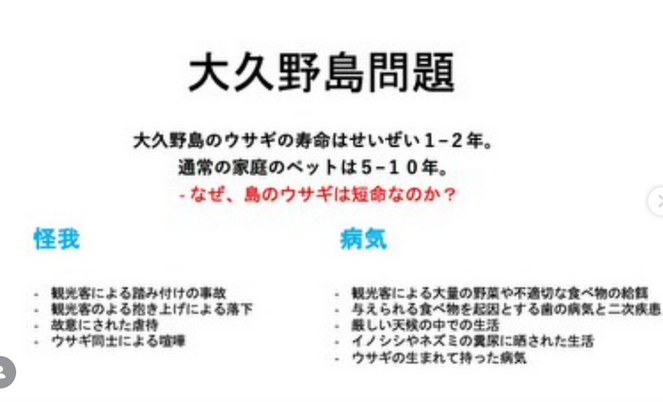
1/11/26
”自然の中でたくましく生きる” 大久野島のうさぎを描写する表現としてSNSで多々見られるフレーズだ。
しかし本当の意味でケア、管理されないウサギ達はウサギの持つ習性に翻弄されながら、厳しい天候の中で暮らし、観光に消費されるだけの悲しい動物だ。
ウサギを飼ってる人ならわかる目の死んだウサギや辛そうな表情をしているウサギ。飼ったことがなく知らない人はそんな様子がまったりしてるように見えているようだ。
SNSでどのように盛り上げたって現実は変わらない。大久野島はウサギの楽園とはほど遠い存在である。
ウサギたちがずっと元気に暮らしているのならともかく、実情はその元気に見えるシーンは一時的なものである。遅かれ早かれ、病気になって早死にしていくウサギが圧倒多数である事実は変わらない。
いつまでも島に通ってウサギ達から元気や勇気をもらいたいという人は驚くほど多い。
でもそれってウサギの為じゃないよね?自分の為だよね?
島に行ったら餌や水をあげずにはいられない。私だって同じだ。お腹を空かせてるウサギを目の前にして何もあげないのは残酷に思える。でもそうすることがウサギの為にはなっていないことを自覚しなければいけない。
環境省がウサギの処遇に関する方針を変えない限り(ケアはしないという方針)、 餌やり水やり行動は島のウサギの残酷な一生の悪循環を助長することにしかなっていない。
"Living robustly amidst nature"—this is a phrase frequently seen on social media used to describe the rabbits of Okunoshima Island.
However, in reality, these rabbits—who receive no genuine care or management—are merely tragic creatures. Buffeted by their own natural instincts and forced to endure harsh weather conditions, they exist solely to be consumed as tourist attractions.
Anyone who has ever kept rabbits will recognize the tell-tale signs: rabbits with vacant, lifeless eyes or expressions of obvious distress. Yet, to those who have never owned a rabbit and lack that experience, these very same behaviors often appear to be nothing more than a picture of laid-back relaxation.
No matter how much social media hypes up the narrative, the reality remains unchanged. Okunoshima Island is, in truth, far from being a "rabbit paradise."
It would be one thing if the rabbits truly lived out their lives in perpetual good health; however, the grim reality is that those scenes of apparent vitality are merely fleeting moments. The undeniable fact remains that, sooner or later, the overwhelming majority of these rabbits will fall ill and die prematurely.
It is astonishing how many people continue to visit the island time and again, seeking to draw energy and courage from the rabbits.
But isn't that really for *your* sake? Not for the rabbits'?
Once you arrive on the island, it is almost impossible to resist the urge to offer food and water. I, too, am guilty of this. Faced with a hungry rabbit right before your eyes, doing nothing feels undeniably cruel. Yet, we must come to the conscious realization that, despite our intentions, such actions do not actually serve the rabbits' best interests.
Unless the Ministry of the Environment alters its current policy regarding the treatment of these rabbits—a policy that essentially dictates "no active care"—the acts of feeding and watering them serve only to perpetuate the vicious cycle of a cruel existence for the rabbits of this island.
If you want to see more detaled slides in English, go to;
https://venusworrell.wixsite.com/ohkunoshima-rabbit/rescued-rabbits

12/31/25
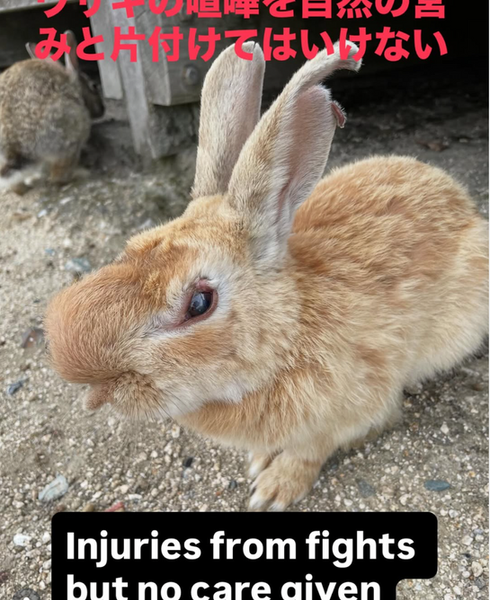
怪我と病気の一つの大きな要因としてウサギ同士の争いがある。これらのウサギ達は文字通り何の制限、選別もされず放し飼いにされている。当然ウサギの習性でテリトリーは作られ、テリトリー内外で絶え間なく争いは起こる。
ウサギはその鋭い歯で相手に噛みつき、鋭い足爪を使って相手を傷つける。この争いはかつて1000匹以上生息した頃も300匹に減った現在も無くなることは決してない。傷つけられたウサギはその多くがその怪我から感染症を起こして亡くなるか、天敵に捕食されている。
自然の中で暮らしていた野ウサギではなく、島に遺棄された家ウサギが繁殖した子孫である。一番最初に遺棄された後も遺棄されたウサギはいくらでもいたはずだ。自然に出来上がったウサギの島ではなく、人間が作りあげた人工のウサギの島で起こる怪我であり、エサやりを許してここまで繁殖を許された中に住むウサギ達だからこそ竹原市と環境省は責任を持つべきである。ウサギの喧嘩も怪我も自然の中で起こったことだからと片付けてはいけない問題である。
島でどのウサギも短命であることを理解した上で数年生き延びることができたウサギをよかったね、大抵ならもうとっくに死んでるよね、などと思って欲しくない。数年しか生きられないことが普通でないことを認識すべきである。
この事実こそが大久野島にウサギが住むこと自体間違っている証明である。
One big factor to injuries and sickness is FIGHTS AMONG RABBITS. These rabbits are left on the island totally unmanaged and they form their own territories. Consequently, they constantly fight inside/outside their territories. They fought when there were 1000 rabbits 10 years ago and even when there are only 300 left today, they still fight.
Attacked rabbits suffer from severe injuries and die from infection or predator attack.
They are not wild rabbits. Someone dumped domestic rabbits and multiplied on the island. In fact, dumping pet rabbits continued on this island. These injuries are occurring on this MANMADE rabbit island and the fact feeding was permitted and rabbit population grew, both Takehara city and the Ministry of Environment should be held responsible for their lives. You should not treat these fight related injuries as incidents in nature.
Realizing short lifespan on the island and finding some rabbits alive after a few years and thinking they are good… no, they are not good… not good at all. It’s not normal for them to live only for a few years.
It’s a clear indication these rabbits do not belong to this island.
12/18/25
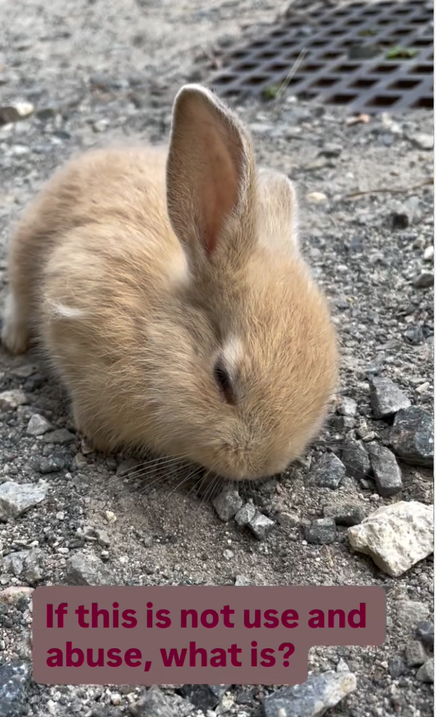
動物愛護精神と真逆のことをやってる大久野島。(写真は鬱滞で瀕死の子ウサギ)
うさぎが多く生息することを売りにしている今やウサギ好きの人なら絶対に行ってみたいと思う観光地。
その実態はどうだろうか?
ウサギ達が走りまわり、人を見るとまるで犬のように近寄ってきて食べ物を欲しがる。
このウサギの行動が家庭で飼われているツンデレなウサギと違い、殆どの人が夢中になる理由である。
国立公園である大久野島は環境省の管轄であるがその島に住む動物達は全く管理をされていない。当然、餌も水も観光客まかせである。与えられる食べ物も観光客は見様見真似で話に聞く良かれと思うものを持ってきて餌やり放題である。当然、その結果、死んでいくウサギも多い。間違って踏まれたり、抱き上げられて落とすことも多く、それが原因で死んでいくウサギもまた非常に多いのである。かろうじて生き延びたウサギもまた放置され結局死んでいく。
観光客が自分のした行動が原因で翌日ウサギが死んでいる事実を知ることはない。可愛い写真を撮って帰っていくだけだ。そして毎日、新しい観光客が訪れこの誰にも知られない悲劇は繰り返される。
大昔に遺棄されたウサギや、近年遺棄されたペットウサギ達は交配を繰り返し、どんどん産まれてはどんどん死んでいく。
このウサギの驚くべき繁殖力があるからこそ、死んでいくウサギが多くても竹原市が全く危機感を覚えることなく、どんどん産まれるからほっといてもいいと思うのだろう。何もしなくてもどんどん産まれる観光資源。大久野島のウサギで利益を得る会社や竹原市にとってこれ以上コスパの良い商売はないだろう。
メンテなし、餌代なし、ケアなしの3拍子揃った理想的な動物観光業だ。
こんなふうに家ウサギを放し飼いにして何も管理をしないで起こっている様々な問題に対処しないのなら大久野島がウサギ虐待の島と批判されても誰を咎めることはできないはずだ。
大久野島が観光地になったのは偶然であろうが、ここまで有名な観光地になったのなら今こそ実態を見直してちゃんとウサギを管理していくべきではないのだろうか?
竹原市、環境省、聞いていますか?
Okunoshima—an island that acts in direct opposition to the spirit of animal welfare. (Pictured: A baby rabbit on the verge of death due to gastric stasis.)
Marketed as a place teeming with rabbits, it has become a tourist destination that any rabbit lover would undoubtedly dream of visiting.
But what is the reality behind the hype?
The rabbits run freely across the island; upon spotting a human, they approach just like dogs, begging for food.
This behavior—so distinct from the aloof, "tsundere" nature of rabbits kept as household pets—is precisely why most visitors become so captivated by them.
Although Okunoshima is a national park under the jurisdiction of the Ministry of the Environment, the animals inhabiting the island receive absolutely no official management or care. Consequently, the rabbits are left entirely at the mercy of tourists for their food and water. Visitors, acting on hearsay or simply following the lead of others, bring whatever they *think* is good for the animals—and proceed to feed them indiscriminately. Unsurprisingly, this results in the deaths of many rabbits. Many are accidentally stepped on, or—even more frequently—picked up by tourists only to be dropped; a great number of rabbits perish as a direct result of such incidents. Even those that manage to survive these ordeals are often left unattended, eventually succumbing to death anyway.
Tourists never learn the truth: that a rabbit may have died the very next day as a direct consequence of their actions. They simply snap a few cute photos and head home. And so, day after day, new tourists arrive, and this unseen tragedy—known to no one—repeats itself endlessly.
The rabbits—descendants of those abandoned long ago mixed with pet rabbits abandoned in more recent years—breed incessantly; they are born in droves, only to die in droves.
It is precisely because of this astonishing reproductive capacity that the city of Takehara—despite the high mortality rate—feels absolutely no sense of urgency or crisis. They likely assume that since new rabbits are constantly being born, they can simply leave things as they are. It is a "tourism resource" that replenishes itself without any intervention. For the companies profiting from Okunoshima's rabbits—and for the city of Takehara itself—there could be no business model with a better cost-performance ratio than this.
It is, in every respect, the "ideal" model of animal-based tourism: a perfect trifecta of zero maintenance, zero food costs, and zero care. If domestic rabbits are left to roam freely in this manner—without any oversight or efforts to address the various problems that inevitably arise—then surely no one can be blamed if Okunoshima comes under fire as an "island of rabbit abuse."
While Okunoshima’s rise as a tourist destination may have been a matter of chance, now that it has achieved such widespread fame, isn't it high time to take a hard look at the reality of the situation and implement proper management for the rabbits?
Takehara City, Ministry of the Environment—are you listening?


12/12/25
大久野島はウサギの犠牲の下に成り立っている観光地であることを忘れてはいけない。
ウサギの病状は大久野島では往々にして軽視されがちである。
2024年9月に救出されたプルルちゃん(チーキー)は風船のように膨れたほっベたは膿瘍で膿を出せば治ると思ったが、実際には根尖膿瘍、栄養失調、不正咬合、顎の骨は感染から溶けており、重度の肺炎、肺膿瘍で手遅れだった。
2025年11月に救出された真空(まひろ)ちゃんは脚の脱臼か骨折かと思いきや、実際には治癒不可能な外傷性化膿性関節周囲炎であり、後ろ足を失うことになってしまった。
そして、2週間前に救出されたわずか600グラムの子ウサギの季希(きき)ちゃんはウサギの喧嘩による外傷かと思ったが、実際には首の骨、顎の骨が折れており、左耳の中耳の骨は粉々に壊れ潰され耳が聞こえることはなく人災だ。
救出されたウサギ達はどの仔も実際には見た目よりはるかに重症であった。
このように救出されるウサギの病状の原因は様々でその多くの死が複合的な理由による感染症の悪化によるが、ウサギが潜在的に持つ病気以外は与えられる食べ物が起因する場合、ウサギ同士の喧嘩の場合、そして人間によって傷つけられる場合がある。過去に相当数の腫瘍を抱えるウサギも島では発見されていて、1番最初に救出された蘭ちゃんの腫瘍はガンであったことからも毒ガス製造をしていた島に未だ残留ヒ素があるのではと疑うのは私一人ではないはずだ。環境省による汚染土壌の処理対策は島の全域には行われていないそうで, 森深く人間は行かなくてもウサギが穴を掘る場所にはヒ素は残っているに違いない。
これらのウサギは元々ここに住んでいた野ウサギではなく、誰かが捨てた家ウサギが繁殖した家ウサギの子孫である。その後も遺棄され続けたウサギも数多くあり自然に出来上がったウサギの島ではなく、人間が作りあげた人工のウサギの島だ。
その人工のウサギ島で餌やり、水やりを許され繁殖した観光道具のウサギ達だからこそ竹原市と環境省がウサギの命に責任を持ってケアする事は当然なされるベき義務であるはずだ。
- なぜ人間の楽しみの為にウサギが犠牲にならなければならないのか?
- なぜウサギ達は守られないのか?
- なぜ医療救出が環境省に肯定的に認められないのか?
- なぜ島の住人であるウサギが病院に行き治療が終わった段階で島に戻れず、遺棄扱いされるのか?
Do not forget Ohkunoshima is a tourist spot at the expense for lives of rabbits.
Medical conditions of rabbits on Ohkunoshima are frequently overlooked.
Pururu (Cheeky)(rescued in Sept 24) had a balloon like lump on her cheek. Initially, we thought it is abscess and can be healed once it’s drained, but her condition involved apical abscess, malnutrition, malocclusion、dissolved jawbone, pneumonia and lung abscess.
Mahiro (rescued in Nov 25) seemed to have broken bone or dislocated hip, but it was incurable septic arthritis and ended up losing his leg.
Kiki, only 600 gram baby rabbit rescued 2 weeks ago, despite suspected injury from rabbit fight, turned out to have neck and jawbone fracture and its left inner ear was totally smashed to irreparable condition due to human related injury.
All of these rescued rabbits were in worse condition than originally anticipated.
The conditions involve infection by multiple factors. Other than inherent disease, causes were wrong diet, rabbit fights and abuse by humans.
Considerable number of rabbits had tumors and the very first rescued rabbit, Ran chan, had cancerous tumor. I’m probably not the only one speculating there is residual arsenic in the ground. According to the report by the Ministry of Environment, removal of arsenic was not completed to cover all the grounds. Deep in the woods where rabbits probably expose themselves to arsenic when they dig the ground.
They are not wild rabbits who originally lived on this island. They were dumped by humans many years ago including dumping in later years and multiplied. Therefore, this is MAN MADE rabbit island. Then, the Ministry of Environment who manages the island and Takehara city where this island is located are both responsible for lives of these rabbits. Especially, the Ministry allows tourists to feed and give water to rabbits and Takehara City exploits them for tourism.
- Why do rabbits need to suffer for enjoyment for humans?
- Why are they not protected?
- Why are medical rescues not accepted positively by MOE?
- Why are rabbits not allowed to come back to the island after medical treatment? Why is coming back home considered as animal dumping?
11/24/25.
環境省のいう ”自然のままに” ウサギを放置し、観光客が善意を持ってウサギに接し、竹原市が順調に観光収入が得られればいいなどともし思っているなら、それはど素人の考えている間違った動物を利用した観光事業です。
柵もなくあんなに可愛いウサギに近寄れ、餌やり放題なんてことができる場所はどこ探したってありません。ウサギが間違って踏まれたり、親に関心を持ってもらえない子供が関心引きたさにウサギを痛める(これは意外に多く起こっている現象)ことなどは起こって当たり前です。
この状況は昨日、今日始まったことではありません。サインをいくら作っても、誰かが注意してもはっきり言って焼石に水だと、12年通ったあとの私の意見です。
ウサギの盗難もウサギの遺棄もウサギの虐待すらも今後も続くでしょう。レンジャーも常駐しないで何を期待するのでしょうか?
餌をやれる時間を制限するふれあい動物園のような形態でもなく、死んでいく子ウサギを守ることなんてできないでしょう。
観光客のマナーに期待するより、ウサギの管理をして守る方向に動かない限り、島のウサギが犠牲になる状況に終わりはありえません。
誰がウサギ達の為に声をあげますか?
中国四国環境省事務所国立公園課
The Ministry of Environment, Chugoku Shikoku office
Email: REO-CHUSHIKOKU@env.go.jp
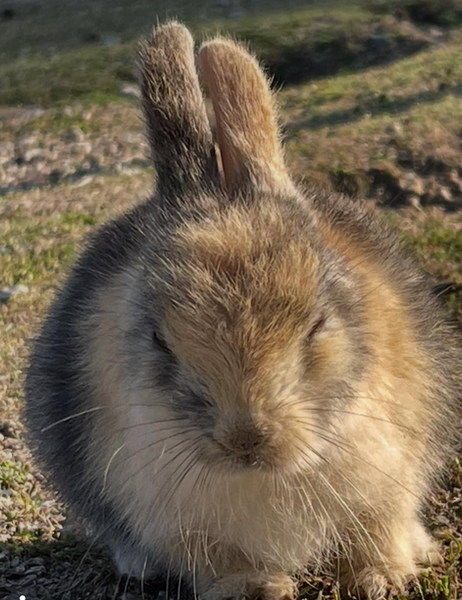
(写真は鬱滞で動けなくなっていた子ウサギ)
If the Ministry of the Environment truly believes that simply leaving the rabbits "to nature"—as they put it—while tourists interact with them out of good intentions, will result in a smooth flow of tourism revenue for Takehara City, then they are engaging in a misguided, amateurish form of animal-based tourism.
Nowhere else can you find a place where you can approach such adorable rabbits without any fences or barriers, and feed them to your heart's content. It is only to be expected that accidents will occur—such as rabbits being accidentally stepped on, or children seeking attention from inattentive parents causing harm to the animals (a phenomenon that, surprisingly, happens quite frequently).
This situation did not begin yesterday or today. After visiting this site for twelve years, it is my firm opinion that no matter how many signs are erected or how many people offer verbal warnings, it is—quite frankly—like pouring water on a hot stone; it makes absolutely no difference.
Theft of rabbits, abandonment of rabbits, and even the abuse of rabbits will undoubtedly continue in the future. With no rangers permanently stationed on-site, what exactly are they hoping to achieve?
Unless they adopt a management model similar to a petting zoo—where, for instance, feeding times are restricted—there is simply no way to protect the vulnerable baby rabbits from harm.
Rather than placing their hopes on the manners of tourists, the authorities must shift their focus toward actively managing and protecting the rabbits; otherwise, there will be no end to the suffering and sacrifice of the island's rabbit population.
Who will raise their voice on behalf of the rabbits?
Ministry of the Environment, Chugoku-Shikoku Regional Environmental Office — National Parks Division
Email: REO-CHUSHIKOKU@env.go.jp
(Photo: A baby rabbit left immobile due to gastric stasis.)
10/30/25
大久野島のウサギは環境省によって生態系被害防止外来種リストの「重点対策外来種」とみなされている。
何十年も前に島に家ウサギが捨てられたのだから”外来種”扱いされても不思議はないのかもしれない。
ウサギが病気や怪我をしていても何も手は下されない。それは島のうさぎの所有権が誰にもなく何もケアせずとも動物愛護法に触れないという理屈になるようだ。誰からも咎められないように上手く定義付けされた印象すら感じる。
しかも、大久野島未来作り実行委員会なるものが作ったルールを環境省のお墨付きで、島のウサギの連れ出しをしないようにお願いしている。本意は島のウサギにありうる病気が島外へ広まらないようにという目的であろうが、そのような病気が仮にあったとしても既に観光客によってそれは広まっている可能性の方が高いのではないだろうか?救出されるウサギは病院へ直行なのでその心配は必要ない。
ウサギに触らない、というルールも病気があるかもしれないからという理由づけになっているようだが、実際はウサギに噛まれて怪我をしない為にというのが本当のところではないだろうか?
かつてウサギがカラスに襲われないようにカラスよけグッズを巣穴に近い木々にぶら下げられたことがある。もちろん程なく全て撤去された。巣穴にいる子ウサギを守る為に巣穴に登らないようサインを掲げてほしいとリクエストした時も、環境省は”ウサギの為”にするサインなどは許さず人が怪我するという理由なら登らないようお願いするサインは場合によってはありうる、と説明を受けた。
残飯を問題視するのも天敵の増加によりウサギが襲われる懸念より、島の景観が損なわれる、衛生上好ましくないという事なのだろう。
つまり、サインにある文言は近年、多少の改善は見られたものの基本的に決してウサギの為にあるものではなく、人を守る、島の自然を守る為のルールだと言わざるをえない。それでも環境省は本来許さない国立公園である大久野島でのエサやりも水桶の設置も竹原市に許している。
餌や水を与えるということはどういうことか理解しているだろうか? それは命に責任を持つということである。
環境省の言及する ”自然のままに” というアプローチは 私に言わせれば ”放置”であり、竹原市がウサギによる観光収入を得ている限り傷病ウサギの放置は立派な動物虐待だと思う。観光客の無責任な不適切な餌やり、子供によるウサギを怪我させる行為の数々。それらに起因する数知れぬウサギの死。
かいがいしくウサギの世話をするボランティアさえウサギの病気、怪我に慣れてしまってその短命の現実を受け入れてしまい、病めるウサギの救出活動に対しルールを破っていると批判、中傷する有り様。元気でいてほしいと給水、給餌する人間のすることかとその矛盾の理解に苦しむのは私だけなのだろうか?
最後まで面倒見るつもりがないのならエサやりも給水することも究極的にウサギの為にはならないと思う。
大久野島は近い将来、何か本当に変わるのだろうか?
ウサギによる観光収入が絶対必要な竹原市はどう対処するつもりなのだろう? Sustainable tourism が本当に存在するなら早く提示して欲しいと思う。
対策不足が原因で相当数に増えたイノシシによるウサギの捕食は起こっている。それはウサギの遺体の発見数が激変した事からも窺える。このままではかつてウサギの島と呼ばれた程の島の景色は全く違うものになる可能性が高くなってきた。
一体、誰がウサギの命を守るのか? いつでも犠牲になるのは他の誰でもない島のウサギ達だ。
Ohkunoshima tragedy still goes on…….
この状況を抗議して頂けるようご協力お願いします。
Please make a complaint to the Ministry of Environment.
中国四国環境省事務所国立公園課
The Ministry of Environment, Chugoku Shikoku office
Email: REO-CHUSHIKOKU@env.go.jp
The rabbits of Okunoshima Island are designated by the Ministry of the Environment as "Priority Invasive Alien Species for Control" on its list of invasive species that pose a risk to ecosystems.
Given that domestic rabbits were abandoned on the island decades ago, it is perhaps not surprising that they are treated as "invasive alien species."
Even when rabbits on the island are sick or injured, no measures are taken to help them. The rationale appears to be that since no one holds legal ownership of the island's rabbits, providing no care for them does not constitute a violation of the Animal Welfare Act. One even gets the impression that this situation has been cleverly defined in this way specifically to ensure that no one can be held accountable.
Furthermore—with the official endorsement of the Ministry of the Environment—a group known as the "Okunoshima Island Future Creation Executive Committee" has established rules requesting that visitors refrain from taking any rabbits off the island. While the underlying intent is likely to prevent potential diseases carried by the island's rabbits from spreading to the outside world, isn't it far more probable that—even if such diseases did exist—they would have already been spread by tourists? Moreover, rabbits that are rescued are taken directly to a veterinary hospital, so there is absolutely no need for concern regarding them.
The rule against touching the rabbits also appears to be justified on the grounds that they might be carrying diseases; however, isn't the true underlying reason actually to prevent people from getting injured by being bitten by the rabbits?
In the past, anti-crow deterrents were hung from trees near the burrows to protect the rabbits from attacks by crows. Naturally, these were all removed shortly thereafter. When we requested that signs be posted asking people not to climb on the burrows in order to protect the baby rabbits inside, the Ministry of the Environment explained that they would not permit signs created "for the sake of the rabbits"; however, they noted that signs requesting people not to climb *could* potentially be approved—depending on the specific circumstances—if the justification was framed around the risk of injury to humans.
Similarly, the concern raised regarding leftover food scraps likely stems less from the fear that an increase in natural predators might lead to attacks on the rabbits, and more from the view that such scraps detract from the island's scenic beauty and create undesirable sanitary conditions. In short, while the wording on the island’s signage has seen some minor improvements in recent years, I am compelled to say that, fundamentally, the rules are by no means designed for the benefit of the rabbits; rather, they exist to protect human visitors and the island’s natural environment. Despite this, the Ministry of the Environment—which oversees Okunoshima as a National Park where such activities would typically be prohibited—has granted the city of Takehara permission to allow both the feeding of rabbits and the installation of water troughs.
Do people truly understand what it means to provide food and water? It means accepting responsibility for those lives.
In my view, the Ministry of the Environment’s touted approach of "leaving nature to take its course" is nothing more than "neglect." As long as the city of Takehara continues to generate tourism revenue on the backs of these rabbits, I consider the abandonment of sick or injured animals to be a clear-cut case of animal cruelty. We witness irresponsible and improper feeding by tourists, along with countless instances of children injuring the rabbits—actions that have led to the deaths of untold numbers of these animals.
Even the dedicated volunteers who dote on the rabbits have, over time, grown desensitized to their illnesses and injuries, resigning themselves to the reality of their short lifespans. Shockingly, they now go so far as to criticize and slander those who attempt to rescue sick rabbits, accusing them of violating the rules. Am I the only one who struggles to comprehend this glaring contradiction—that the very people who provide food and water out of a desire for the rabbits to remain healthy would then turn against those trying to save them?
If one has no intention of caring for these animals through to the very end, then I believe that providing them with food or water ultimately does nothing to truly benefit the rabbits.
Will anything on Okunoshima truly change in the near future?
How does the city of Takehara—which relies absolutely on the tourism revenue generated by these rabbits—intend to address this situation? If "sustainable tourism" is truly a viable concept here, I urge them to present a concrete plan immediately.
Due to a lack of adequate countermeasures, the wild boar population has surged, and the predation of rabbits by these boars is now a frequent occurrence. This grim reality is clearly reflected in the drastic increase in the number of rabbit carcasses being discovered. If things continue on this path, there is a growing likelihood that the landscape of this island—once celebrated as "Rabbit Island"—will be transformed into something entirely different.
Who, then, will step forward to protect the lives of these rabbits? Time and again, the ones who end up as victims are none other than the rabbits of the island.
The tragedy of Okunoshima continues...
We ask for your cooperation in lodging a protest against this situation.
Please file a complaint with the Ministry of the Environment.
Ministry of the Environment, Chugoku-Shikoku Regional Environmental Office — National Parks Division
Email: REO-CHUSHIKOKU@env.go.jp


10/21/25
2022年の夏、観光客が車を停める第2桟橋にチャコールグレーのウサギが居た。極端に痩せた身体からガリガリと名付けられた。自転車に轢かれたのか車に轢かれたのかはわからないが、腰や後ろ足がひどい怪我をしていた。背中の骨は歪曲し、歩く時には体全体を引きずるように動いていた。怪我をした多くのウサギのように、ガリガリちゃんも他のウサギ達から追われ、仲間から距離を置いているように見えた。
一人ぼっち….お腹を空かせて
ガリガリちゃんは登ることも走り回ることもできなくなっていた。桟橋にあったコンプレッサーの後ろやグレーチングの下でじっとしていることが多かった。この仔のことを投稿し始めると沢山の人が立ち寄ってくれて餌をあげてくれた。誰もがこのまま、生きていけるかもしれないと思った。
最後には、ある朝、傷ついた多くのウサギ達がそうであるように、ガリガリちゃんはカラスに襲われその短い一生を終えた。
保護されることもなく放置状態の大久野島のウサギ達は過酷な環境の中で生きることを強いられ、その多くが長生きはできないでいる。
こんな状態が間違っていると感じる方は、ウサギのケアをするつもりのない環境省に抗議のメールを送ってください。
中国四国地方環境事務所_意見募集・相談(the Ministry of Environment -Chugoku Shikoku division)
Email address:
REO-CHUSHIKOKU@env.go.jp
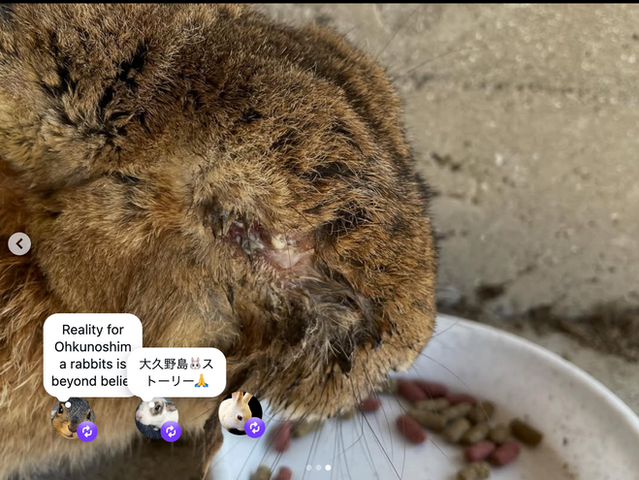
In summer of 2022, a charcoal gray rabbit was called Garigari (means extremely skinny). She lived in pier 2 of Ohkunoshima where visitors parked their cars. No one knows how she got injured. Some say she was run over by a car being parked or bicycle. Her hips and hind leg were severely damaged. Her back bone was warped and she appeared to drag her entire body sideways when she moved. Like most injured rabbits on the island, she was constantly chased by other rabbits and she stayed away from everyone else.
Alone….Starving….
She could no longer climb hill or run around. She stayed behind the compressor or under the grating for shelter. As we started to post about her, many people stopped at pier 2 and started to make sure she gets fed. We all felt she might be able to live a long time in that condition.
In the end, one morning, she was attacked by a crow and ended her short life like others.
Without any protection, rabbits on Ohkunoshima are forced to live in harsh condition and finish their such short life.
Are they exploited for tourism? Absolutely!
Any medical care given? Never!
This place is like a zoo without zookeepers.
If you care, please write to the Ministry of Environment in Japan in charge of this national park who has no intent to provide care for these rabbits;
中国四国地方環境事務所_意見募集・相談(the Ministry of Environment -Chugoku Shikoku division)
Email address:
REO-CHUSHIKOKU@env.go.jp

10/15/25
大久野島。そこは第2次世界大戦中に毒ガス工場があった島ですが、その後捨てられたウサギ達が何年にもわたり乱繁殖を繰り返し出来上がったウサギが数多くが住む小さな島です。
知る人ぞ知るウサギの住む島でしたが10年くらい前からYouTuber により世界中にその存在が知られるようになり観光客の数は急増しました。それに伴い竹原市も広島県も島のウサギをポスターに載せ観光促進に力を入れました。
多くの観光客や写真を撮るのが好きな人達によりSNSで可愛いウサギの様子が投稿されてその観光促進の相乗効果は抜群だったに違いありません。日本全国、世界中からウサギ好きの人達が来る島になっていきました。
かつては廃線、廃航路も噂された呉線や大三島フェリーも大久野島のウサギのおかげでその状況を免れたと聞いたことがあります。
私も初めて島を訪れた2013年には島を埋め尽くすようなそのウサギの数に圧倒されたのを覚えています。国立公園である場所でエサやりが許され水桶も置かれているのを見てウサギ達はきちんとお世話されているのかと思いきや、実情は放置状態であり給水やゴミ拾いまでボランティア任せだったのを知った時は半信半疑でした。当然、ケアなどはもちろん存在せず、2013年当時も病気や怪我のウサギはあっちこっちにいました。来るたびにウサギメンバーがガラリと変わっていたことからも当時もウサギ達の多くが短命であったことは間違いないと思います。かつてはウサギの数が多ければ多いほどエサやりが楽しいなどと思っていた私ですがのちに多くのウサギ達が怪我や病気で命を落とすのを何年も目撃し続けた事で大久野島の残酷な放置状態の生活環境に憤りしか感じなくなるようになったのです。
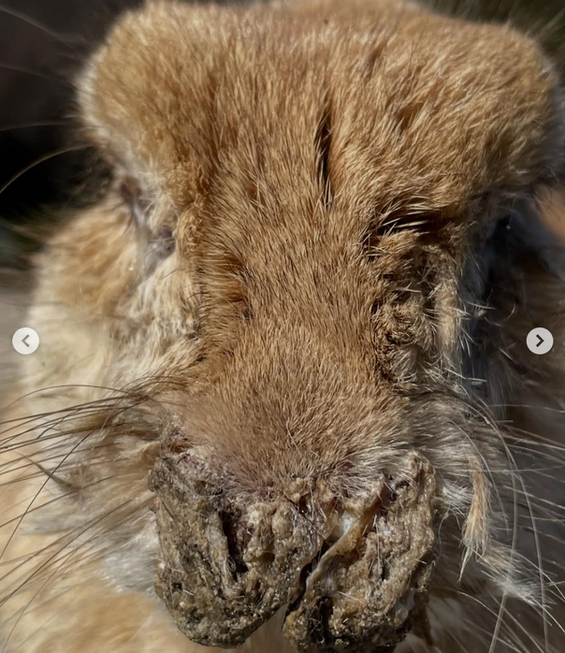
写真のウサギは一目でわかるように病気です。深刻な感染症にかかっていて、社交性の高いウサギなのにいつもひとりぼっちでパートナーもおらず誰にもグルーミングもされずボサボサを通り越してあまりにも惨めでボロボロでした。この状態に陥るウサギは通常呼吸困難で亡くなるか天敵によって殺されます。
環境省は島のウサギは外来種扱いだとしてケアなど一切するつもりはないそうです。竹原市に国立公園でのエサやりを許し水桶の設置も許して観光事業を容認しているならば、その一番の観光資源であるウサギのケアをしないというのは許される事なのでしょうか?
ウサギの医療ケアはされるべきだと思う方は中国四国地方環境事務所にご意見を送ってください。多くの方の声が大きな力になります。
中国四国地方環境事務所_意見募集・相談
REO-CHUSHIKOKU@env.go.jp
Okunoshima. It is an island that once housed a poison gas factory during World War II; however, it has since become a small island inhabited by a multitude of rabbits—descendants of those abandoned there years ago, who subsequently bred unchecked over many generations.
For a long time, it remained a "hidden gem"—an island known only to a select few as a home for rabbits. However, starting about a decade ago, YouTubers began broadcasting its existence to the world, causing the number of tourists to skyrocket. In response, both the city of Takehara and Hiroshima Prefecture seized the opportunity, featuring the island's rabbits on promotional posters and pouring their efforts into boosting tourism.
With countless tourists and photography enthusiasts posting images of the adorable rabbits on social media, the synergistic effect on tourism promotion must have been nothing short of spectacular. The island soon evolved into a pilgrimage site for rabbit lovers flocking in from all corners of Japan and the globe.
I have even heard that the Kure Line railway and the Omishima Ferry—transportation links once rumored to be facing closure or discontinuation—were saved from that fate thanks to the rabbits of Okunoshima.
I still vividly remember my first visit to the island in 2013, when I was overwhelmed by the sheer number of rabbits—so many that they seemed to blanket the entire island. Seeing that feeding was permitted within this national park, and observing the water basins placed throughout the grounds, I initially assumed the rabbits were being properly cared for. However, when I later learned the grim reality—that they were essentially being left to fend for themselves, with even tasks like replenishing water and picking up trash left entirely to volunteers—I could hardly believe it. Naturally, there was absolutely no veterinary care provided; even back in 2013, sick and injured rabbits could be seen scattered everywhere. The fact that the specific population of rabbits seemed to change completely with every subsequent visit leaves no doubt in my mind that, even back then, the majority of the rabbits were living very short lives. I, too, once held the naive belief that "the more rabbits there are, the more fun it is to feed them." However, after years of witnessing countless rabbits lose their lives to injury and disease, my feelings eventually shifted; I came to feel nothing but indignation toward the cruel, neglected living conditions to which the rabbits of Okunoshima are subjected. As is evident at a glance from the photograph, this rabbit is ill. It is suffering from a severe infection; despite being a highly social animal, it is constantly alone—without a partner or anyone to groom it—and has fallen into a state so wretched and dilapidated that its fur is far beyond mere dishevelment. Rabbits that fall into such a condition typically perish from respiratory distress or are killed by natural predators.
The Ministry of the Environment has stated that, as the island's rabbits are classified as an invasive species, it has absolutely no intention of providing them with any care. However, if the Ministry permits the city of Takehara to allow feeding and the installation of water troughs within the national park—thereby sanctioning the tourism industry—is it truly justifiable for them to refuse to provide care for the very rabbits that serve as the industry's primary tourist attraction?
If you believe that these rabbits should receive medical care, please send your feedback to the Chugoku-Shikoku Regional Environmental Office. The collective voices of many individuals can become a powerful force for change.
Chugoku-Shikoku Regional Environmental Office — Feedback & Inquiries


10/11/25
フライガールと呼んだその女の子のウサギは2022年の夏、大久野島の第2桟橋に黒いウサギのパートナーと暮らしていました。ハエがブンブン身体の周りに飛び回り内臓に病気があるのかもしれないと思ったものです。痩せすぎて背骨が突き出すようにガリガリになって、どんなに食べてもどんどん痩せていくように感じました。毎日朝晩エサと水をあげるようになってからは待っているようになり私達の顔を見て今日も来てくれた、今日も食べれると安心したように目が輝いたのを覚えています。そんなウサギでしたが重篤な病気で先が長くないことを本人もわかっているように思えました。1週間が過ぎたあたり、ある日の夕方、食事を終えるとその痩せた身体で起き上がりよろよろと歩き始めました。その姿をじっと見ていると1度だけこちらを振り返った後、山の方向へ消えて行きました。マイケルはあれはさよならの合図だったと言いました。マイケルがウサギの為に流した涙を見たのはそれが初めてでした。その日を最後にそのウサギを見ることはなくなりパートナーだった黒うさぎがしばらくぽつんと1人で残されていました。
そういう島の病めるウサギ達のお世話を何年もするようになり数知れないほどのウサギ達の死に直面してもアメリカに住んでいて日本に家のない私達に病気のウサギを自分たちで保護する選択肢はありませんでした。
2024年6月に出した投稿に応えてくれて蘭ちゃんという左耳に大きな腫瘍を持つウサギを救出してくれたのが現在まで一緒に活動してきた救出チームの皆さんです。長年島に通っていた、ただの観光客の私の投稿に真剣に向き合ってくれた仲間のみんなは私には命の恩人同様です。
救出活動も1年を過ぎ、救出後元気になって新しい家庭へ旅立つウサギ達を見られる喜びはひとしおです。救出した事は正しかったと思える瞬間です。 しかしそれでも救出されたウサギが治療中に亡くなるのを見ることは耐え難く、それは島で亡くなっていくウサギに心が痛むより辛いです。救出のタイミングを逃した後悔で夜も眠れない日が続いたり、救出した以上治ってもらわなければという責任に押し潰されるようにもなります。
誰にとっても家というのは安全、安心に暮らせる場所であるはずですが、これらのウサギ達にとって家であるこの島は残留ヒ素が深く残るであろう土壌。また不潔な生活環境、イノシシやネズミの糞尿に常に晒された生活。どんな病気になっても不思議はなく、実際ほとんどのウサギが何らかの疾患を持っているのではと救出活動を通して認識し、そんな島の状況さえ恨めしく思えます。
マイケルと私は大久野島のウサギの救出活動の一線から退きます。アメリカに住んでいては日本での救出活動に効率的に貢献できてないのが現状です。救出チームの賛同者も着々と増えて@her.name.is.mercedes,も島での時間を過ごす事ができて引き継ぎが終えられたと感じます。
今後は応援する側にまわり、救出チームの活躍を見守るつもりです。
大久野島の過酷な状況の発信自体は以前通り続けていこうと思っています。無駄に亡くなっていくウサギ達の声になって島の状況を周知しなければいけないと思っています。また周知だけでなく違う形で島の改善に繋がる活動ができれば、と考えています。
これまで投稿をフォローされた方々には引き続き救出チームの動向を暖かく見守って頂けるますようお願い申し上げます。
救出チームの皆様、今までありがとうございました。貴方達は私にとって本当のヒーローです。これからも負けずに頑張ってください。応援しています。
There used to be a sick female rabbit at pier 2 of Ohkunoshima back in summer of 2022. We used to call her Fly Girl. She had the black rabbit as her partner but flies were constantly flying all over her body. We suspected she had issues with her intestines. She was abnormally underweight and her backbone was even sticking out. No matter how much she ate, she seemed to be losing weight. We provided food and water twice a day and she started to wait for us as if she knew she would get to eat.
After one week or so, one early evening, after being fed, she staggered to her feet and looked back once at us and left. Michael said that was her goodbye to us. It was my first time to see Michael cry for rabbits. We never saw her again and her partner was seen by himself afterwards.
We continued to take care of rabbits and witnessed countless rabbits pass away from sickness and injuries over the years. As we don’t live in Japan, rescuing any of those sick rabbits was not an option for us.
People who responded to my June 2024 post about the rabbit with huge tumor on her left ear are the people we currently work with as Rescue Team. We are forever grateful to them for rescuing Ran chan and giving her new life.
After 1 year of rescue activities, to be able to see rescued rabbits make full recovery and find new homes is extremely rewarding. The moment you can feel the rescue was the right thing to do. However, to lose them during medical treatments is too painful to endure than watching rabbits pass away on the island. A lot of sleepless nights from regrets not rescuing them sooner and felt responsible for them to get better.
The team has been able to gain more participants and we feel we were able to hand off to @her.name.is.mercedes, who visited the island last month.
We will continue to post about Ohkunoshima rabbits as we need to be the voice of these rabbits suffering on this island.
Not only awareness campaign, we need to drive changes for the island so rabbits don’t have to suffer any longer.
We’d appreciate your continuous support for the Rescue Team as you did in the past.
Team, thank you for your efforts and achievements. You guys are true heroes. We will be rooting for you all as always.
9/25/25
オレオの死に思うこと
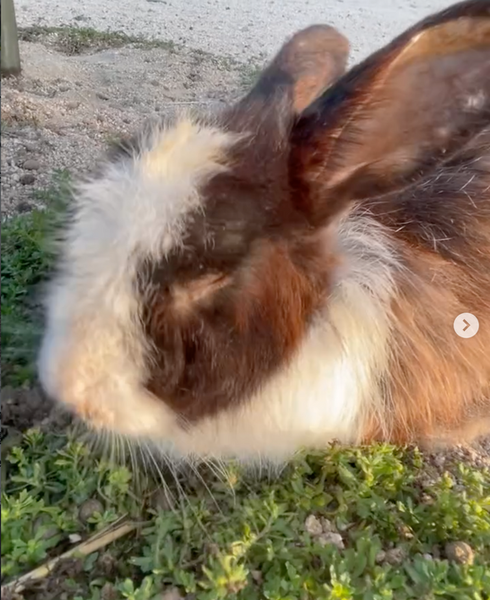
初めてオレオを見たのは2024年の2月末頃だった。黒と白のふわふわウサギだった。プールの海側の建物の近くで生まれたのだろう。金網の近くから広場に向かって何度も走っているのが見えた。
何なんだろう? 赤ちゃんのオレオは小さな黒白の毛玉が風で地面を転がるように見え、しかしすぐそれが子うさぎであることがわかった。決して人には近づかず逃げてしまい、だからこそオレオが小さい頃の写真は全く撮れなかった。人慣れしないその性格は島で生き残れることに幸いした。島で1歳を迎えることができるのは10%に満たないと言われる中、そしてプールサイドで産まれる子うさぎはカラスにことごとく捕食されていたがオレオは無事に育っていった。2度目に会ったその年の6月にはその色合いからオレオという名前が付けられたと聞いた。人慣れしない様子は相変わらずだった。でもそれが島で長生きするのには良いことだと思いエサを置いて離れた所で見ていると美味しそうに食べていたのを覚えている。アップの写真を撮ろうとするとすぐ逃げてしまうのは変わっていなかった。3度目に会った2025年の2月にはすっかり大人になっていてその容姿からよく目立つウサギになっていた。その時はその他大勢の中で食事する様子しか覚えていない。その時もエサ欲しさにフレンドリーになる多くのウサギとは全然違っていた。
そして今回見たオレオは明らかに前回とは違っていた。鼻の感染症で変な呼吸の仕方もしていて、ほとんど食べれていないことに危機感を覚えた。ペレットを差し出しても顔をプイと横にするような仕草を見せマッチ棒サイズに切ったニンジンなら食べれるがその量も他のウサギに比べたら比較にならないほど少なかった。思いきって身体を触ったらガリガリで骨がゴツゴツしていたのに唖然とした。このままでは死んじゃう….
救出後の検査で鼻の骨も耳の骨も感染症から溶けて消失してることを聞いた。嗅覚もほとんどなく重度の中耳炎で耳も聞こえていなかっただろうと。奥歯は複数の歯根が破壊されて食事も十分にとれていなかったのではないかとの診断だった。
オレオはどんな気持ちで暮らしていたんだろう? 何も聞こえない生活。何も匂わない食べ物。全てから隔絶されたようなオレオの振る舞いが今となっては納得できる。ひとりぼっちでいる事が多く、みんなと食べる時にはその中で何も食べずジッとしていたり、または食べるそぶりを見せても食べ物が口から落ちていくのがビデオで確認される。
大久野島の多くのウサギのようにオレオもまた感染症にかかり徐々に悪化していった。誰にも気づかれずに。
島での1年7か月の兎生はどんなものだったのだろう? 病気に蝕まれていく中で食べていこうとする生活? 島を出る前のオレオはそこに居るだけでしんどそうだった。辛かったのは間違いないだろう。
もっと….もっと早くに救出してあげたかった。
また1匹、多くの人に親しまれたウサギがお月様組になってしまった。
大久野島のウサギの命の終わり方を多くの人に知ってほしい。
このままで本当にいいのですか?
Reflections on Oreo’s Passing
I first laid eyes on Oreo around late February 2024. She was a fluffy black-and-white rabbit. She was likely born near the building situated on the ocean side of the swimming pool. I often saw him darting back and forth from the vicinity of the wire fence toward the open plaza.
What on earth is that? As a baby, Oreo looked like a tiny black-and-white furball tumbling across the ground in the wind; yet, I quickly realized she was, in fact, a young rabbit. She never approached humans—always fleeing instead—which is precisely why I wasn't able to take a single photograph of her during her early days. This skittish nature, however, proved to be a blessing for her survival on the island. It is said that fewer than 10% of the rabbits on the island live long enough to celebrate their first birthday; moreover, while most of the rabbits born by the poolside were invariably snatched up by crows, Oreo managed to grow up safe and sound. When I met her for the second time—that same year, in June—I heard that she had been given the name "Oreo" due to his distinctive coloring. Her wary attitude toward humans remained unchanged. Yet, believing that such wariness was actually beneficial for a long life on the island, I would leave out some food for her and watch from a distance; I remember how he would eat it with evident relish. One thing that hadn't changed was his tendency to flee the moment I tried to take a close-up photograph. By the time I met her for the third time—in February 2025—she had fully matured into an adult, and her striking appearance made her a particularly conspicuous figure among the rabbits. On that occasion, the only image I retain is of her eating amidst the general crowd. Even then, she stood in stark contrast to the many other rabbits who would suddenly turn friendly just to get their paws on some food.
Oreo I saw this time, however, was clearly a different rabbit than the one I had seen before. She was breathing strangely—a sign of a nasal infection—and I felt a surge of alarm upon realizing that she was barely eating anything at all. When I offered her some pellets, she would turn her face away with a dismissive gesture; while she would eat carrots cut into matchstick-sized strips, the amount she consumed was—compared to the other rabbits—incomparably meager. Mustering the courage to reach out and touch her, I was left aghast: her body was emaciated, and I could feel her bones protruding sharply beneath her fur. "If things go on like this... She's going to die."
Following her rescue, medical examinations revealed that the bones in both her nose and ears had completely dissolved and vanished due to infection. It was determined that she possessed almost no sense of smell, and—suffering from severe otitis media—she likely could not hear anything either. Furthermore, the diagnosis indicated that the roots of several of her molars had been destroyed, suggesting she had been unable to consume adequate food.
What must have been going through Oreo’s mind as she lived like that? A life where she could hear nothing. Food that held no scent. Looking back now, Oreo’s behavior—which often seemed as though she were completely cut off from everything around her—makes perfect sense. She spent much of her time alone; even when gathered with the others to eat, she would often simply sit motionless without touching her food. Videos even captured moments where, despite making the motions of eating, the food would simply fall right back out of her mouth.
Like so many other rabbits on Okunoshima Island, Oreo, too, contracted an infection that gradually ravaged her body—all without anyone ever noticing.
What must her life have been like during those one year and seven months on the island? A daily struggle to simply survive and eat while her body was slowly being consumed by disease? In the days leading up to her departure from the island, Oreo looked utterly exhausted just by his mere presence there. There is no doubt that she suffered terribly.
I wish... I wish we could have rescued her sooner.
Once again, another rabbit—one who was cherished by so many people—has crossed over to join the "Moonbeam Brigade."
I want everyone to know the reality of how the rabbits on Okunoshima Island meet their end.
Is it truly acceptable to let things continue this way?

9/17/25
家族から引き離したという批判が大久野島の傷病ウサギの救出で言われることがある。
しかし一旦怪我をしたウサギはその性格すら変わったのではと思うほど極端に臆病になり他のウサギが近づくだけで逃げ始める。周りのウサギ達も怪我をした弱いウサギには容赦ない。稀に怪我をしていても群れの中で攻撃を免れるメスがいる事があるが通常怪我したウサギの最後は惨めでそのむごさは耐えがたいものである。
ウサギは同じパートナーに決して忠実ではない。複数のパートナーを持ったり、パートナーが亡くなれば新しいパートナーを見つける事に困難をきたすようには見えない。
群れを成す多くの動物に見られるように新しいパートナーを見つけることは自然の中でされる当たり前の営みなのであろう。
長年島に通うウサ活と呼ばれる人達はウサギに対して特別の感情を持っているように思える。それは人間の世界で見いだせなかった家族の絆(可愛いウサギが家族を舐めたりする様子は心に響くのだろう)に心を打たれその様子を島のウサギの全てであるように思っているのだと思う。私はそういうウサギの様子に心が打たれる事が悪いと言っているのではない。しかしその容姿に惑わされてその妄想で人間としてすべき動物を助けるという道徳的義務を忘れてしまってるように感じる。
ウサギは人間ではない。人間のように感じる感情を持続的に持つことなどできない。2024年7月に救出された蘭ちゃんは冷房の効いた車に乗せられ島では食べたことのない美味しいものをもらって食べ始めた時、仲間の事を考えただろうか? 島を出たらみんなに会えなくなっちゃうよ。そんな事を感じる知能や感情は持ち合わせずそんな素ぶりを見せるはずもなかった。
島からの連れ出しに反対する過程でもっとも世間に支持されるストーリーだと思いそれを前面に打ち出し救出チームを中傷することで島を守ろうとしたのだと思う。何が何でも潰してやるという個人的な恨みさえ感じさせられる1年をSNSの世界で過ごした。それでもウサギファーストを考えて救出チームは活動してきた。ウサギを助けられるのは人間しかいないからだ。行政が助けないなら有志で救うしかない。
子供じみた争いには終止符を打ちたいと思う。こんな争いからポジティブな事など何も生まれない。
ある反対者の1人が私達の投稿にいいねしたからと詰問したり島で会ったら無視をするというようなまるで中学生のような行為は本当に60に近い人間のする事なのかと驚きを越して呆れる。もうやめてほしい。
そんな事をしていないで行政に働きかけてウサギの処遇を変えるように活動すべきだと思う。行政にへつらって何とかウサギ部会に入れてほしいというような姑息なマネはやめてほしい。そもそも環境省によるウサギ部会の人選自体腑に落ちない。
行政が何らかの対策を打ち出さない何年もの間に大久野島の生態系が変わってしまった。 このまま向こう1-2年どうなってしまうのかと考える事が多くなった。本当に大久野島のウサギの将来を考えている人がいるのだろうか?行政は何をしてくれるのだろう?人任せにしてはいけない。みんなで竹原市や環境省にウサギの処遇改善要求をすべきである。このままでは島の行く末の答えはもう出ている。ウサギ達はまた置き去りにされるか、その存在すらぼやけて見えなくなる。
Criticism—specifically the accusation that we are "tearing families apart"—is sometimes leveled against our efforts to rescue injured and ailing rabbits on Okunoshima Island.
However, once a rabbit sustains an injury, it becomes so profoundly timid—to the point where one might think its very personality has changed—that it flees at the mere approach of other rabbits. The surrounding rabbits, too, show absolutely no mercy toward an injured, vulnerable individual. While there are rare instances of injured females managing to avoid attack within the safety of the group, the ultimate fate of an injured rabbit is typically wretched—a cruelty so harrowing that it is almost unbearable to witness.
Rabbits are by no means strictly faithful to a single partner. They frequently take multiple partners, and should a partner pass away, they appear to face no difficulty whatsoever in finding a new one.
As is common among many herd-dwelling animals, seeking out a new partner is likely just a natural, routine part of life in the wild.
Those individuals who have been visiting the island for years—often referred to as *Usakatsu* (rabbit enthusiasts)—seem to harbor a unique emotional attachment to the rabbits. I believe they are deeply moved by a sense of "familial bonding"—a bond they perhaps failed to find in the human world (the sight of a cute rabbit grooming a family member likely resonates deeply with them)—and they have come to view these specific interactions as representative of the *entire* reality of the island's rabbit population. I am not suggesting that it is wrong to be moved by such scenes of rabbit behavior. However, I feel that they have become so beguiled by the rabbits' charming appearance—and so consumed by this romanticized fantasy—that they have lost sight of their moral obligation, as human beings, to assist animals in need.
Rabbits are not human beings. They are incapable of sustaining complex emotions—the kind that humans experience—over any extended period. When "Ran-chan," a rabbit rescued in July 2024, was placed in an air-conditioned vehicle and began eating delicious treats she had never tasted on the island, did she spare a single thought for her companions back home? Did she think, "If I leave the island, I’ll never get to see everyone again"? She possesses neither the cognitive capacity nor the emotional depth to experience such sentiments, and she certainly displayed no outward signs of doing so.
I believe that those who oppose the removal of rabbits from the island identified this particular narrative—the "tearing families apart" storyline—as the one most likely to garner public sympathy; they chose to thrust it to the forefront of the debate, attempting to "protect" the island by casting aspersions upon the rescue team. I have spent the past year navigating the world of social media, enduring an atmosphere so hostile that it felt driven by a personal vendetta—a determination to crush us at any cost. Yet, throughout it all, our rescue team has continued its work, always putting the rabbits first. This is because humans are the only ones capable of saving them; if the authorities will not step in, then it falls to concerned volunteers to do so.
I wish to put an end to these childish squabbles once and for all. Nothing positive can ever emerge from such conflict. The behavior displayed by some of our detractors—such as interrogating someone simply because they "liked" one of our posts, or deliberately ignoring us when we cross paths on the island—is truly baffling. It goes beyond mere surprise; I am utterly dumbfounded that people nearing the age of sixty could act with the maturity of middle schoolers. I implore them to stop.
Rather than engaging in such antics, they should be channeling their energy into lobbying the authorities to improve the conditions for the rabbits. I also wish they would cease their petty maneuvering—such as fawning over the administration—in a desperate bid to secure a seat on the Rabbit Subcommittee. In fact, the Ministry of the Environment’s selection process for that very subcommittee remains deeply unconvincing to me.
Over the years that the administration failed to implement any meaningful measures, the ecosystem of Okunoshima has undergone a drastic transformation. Lately, I find myself constantly wondering what the next year or two will hold. Is there anyone out there who is truly concerned about the future of the rabbits on Okunoshima? What, if anything, will the administration actually do? We cannot simply leave this in the hands of others. We must all join forces to demand that both Takehara City and the Ministry of the Environment take action to improve the welfare of the rabbits. If things continue on their current path, the fate of the island is already sealed: the rabbits will once again be abandoned—or worse, their very existence will fade into obscurity until they vanish from sight entirely.

9/16/25
“自由でのびのびと幸せに暮らしている”
自分をめがけて走ってくるウサギ達に興奮し貪るように食べる姿が可愛いと思い、また会いに来たいと感じる。
大久野島に来る観光客は誤解している。
たまたま自分が島を訪れた時の印象で幸せに暮らしていると判断してるのだろうが酷暑の中のウサギ達の様子を見たことがあるだろうか? 私とマイケルは熱中症で亡くなっていくウサギを目のあたりにした事がある。島で過ごす時間が多ければ多いほど、ウサギ達が幸せに暮らしているという発言は出ないはずだ。
人をめがけて走ってくるのはお腹が空いているからであり、誰よりも早く食べなくては次がいつかわからないからだ。ウサギの可愛い容姿のためこうした行動が観光客に間違った印象を与えている。
自由でのびのびと暮らしている、と誤解しているのは島の中で駆け回っているからだと思うが、実際にはある一定のサイズのテリトリー内で暮らしておりそのテリトリーの中でも力関係がはっきりと存在し弱いウサギは怯えながらなんとかエサにありつこうとするのである。だからこそ耳が欠けたり、目が引っ掻かれた皮膚が破れたりしているウサギを見かけるのだ。
空腹が絶頂に達する場合は見境なくテリトリーを超える事で本来のテリトリーのボス及び他のウサギによって攻撃される。その攻撃は追い回されるだけでなく場合によっては死闘となり攻撃されるウサギは傷つき死に至る場合もある。
島の個体数が減っても争いはなくならない。それは縄張り意識の強いウサギの習性が変わらないからである。同じテリトリー内でもメスのウサギをめぐりケンカも没発するのである。
家族と一緒で仲良くしている、というケースはほんの一握りであった。社交性の高いウサギはパートナーを作る傾向にあるのは事実だが必ずしも鳥のように添い遂げるということはない。
ウサギが一緒に座っている様子を見て様々なストーリーが作られ投稿されている。しかし一旦怪我をすれば仲間から追い出すし、子うさぎだって仲間が食べてるところに近づかせず餓死に追い込む場合だってあるのだ。ウサギの社会はそんな甘いものではない。
野生のウサギだからしょうがないという人も見かけるがそもそも家ウサギが野生に放たれて出来上がった生活体系ではないか。野生のウサギでもなんでもない。はっきり言って野放し、放置状態で出来上がった大久野島のウサギの暮らしである。病気が蔓延しどのウサギも昇降状態を保ちながらも遅かれ早かれ重症となり短い命を終えていく。観光客に抱っこの写真が欲しいからと持ち上げられウサギは抵抗して落ちる—->骨折する。子供はウサギを昼でも真っ暗な夜でも追い回し、起こるべくして踏み潰し骨折させる。
私はこのようにウサギ達を野放しにして観光客を呼びこみ続ける事、無責任にウサギを追い回す観光客の行動は動物虐待に等しいと思う。ウサギ達は人間の欲望の犠牲となっている事実から目を背けないでほしい。大久野島は絶対に変わらなければいけない。
“Living Freely, Carefree, and Happily”
Tourists often find it adorable—and exciting—to see rabbits rushing toward them, devouring the food offered to them with such gusto, and this leaves them feeling that they want to return to visit again.
However, the tourists who come to Okunoshima Island are under a misconception.
They likely judge that the rabbits are living happily based solely on the impressions formed during their own brief visits to the island; but have they ever witnessed the rabbits’ condition during the scorching heat of summer? Michael and I have personally witnessed rabbits dying from heatstroke. The more time one actually spends on the island, the less likely one is to claim that these rabbits are living a happy life.
The reason they rush toward people is simply that they are hungry—and because they know they must snatch up food faster than anyone else, as there is no guarantee of when their next meal might come. Due to their cute appearance, this behavior creates a false impression among tourists.
I believe the misconception that they are “living freely and without restraint” stems from the fact that they are seen running around the island. In reality, however, they live within territories of a specific, limited size. Within these territories, a clear social hierarchy exists; weaker rabbits live in constant fear, struggling desperately just to get their paws on some food. This is precisely why one often encounters rabbits with torn ears, scratched eyes, or lacerated skin.
When hunger reaches a critical point, a rabbit may cross territorial boundaries indiscriminately; when this happens, it is attacked by the boss of that territory—or by other rabbits within it. These attacks are not limited to mere chases; in some cases, they escalate into life-and-death struggles, leaving the victim severely injured—sometimes even resulting in death.
Even if the island’s rabbit population were to decrease, the fighting would not cease. This is because the rabbits’ deeply ingrained territorial instincts remain unchanged. Even within the same territory, fights frequently erupt over female rabbits.
Instances where rabbits were truly living together harmoniously—like a family—were few and far between. While it is true that highly social rabbits tend to form partnerships, they do not necessarily remain together for life in the way that certain bird species do. Observing the sight of rabbits sitting together, people concoct and share all sorts of sentimental stories. Yet, the reality is far harsher: should a rabbit sustain an injury, its companions will cast it out; in some cases, they will even prevent young kits from approaching their food source, effectively starving them to death. Rabbit society is not nearly as idyllic as it appears.
Some might argue that such behavior is inevitable because these are "wild" rabbits; however, isn't this social structure merely the result of domestic rabbits being abandoned in the wild? They are not truly wild rabbits—far from it. To put it bluntly, the existence of the rabbits on Okunoshima is simply the product of being left completely unchecked and neglected. Diseases run rampant; while the rabbits may experience brief periods of remission, sooner or later their conditions inevitably worsen, bringing their short lives to a tragic end. Tourists, seeking a photo of themselves holding a rabbit, will lift the animals into the air; the rabbits struggle to break free, fall to the ground, and suffer broken bones. Children chase the rabbits relentlessly—whether in broad daylight or the pitch-black of night—and, with grim inevitability, trample them underfoot, causing fractures.
I firmly believe that continuing to leave these rabbits to fend for themselves merely to attract tourists—and the irresponsible behavior of those tourists who chase the animals—amounts to nothing less than animal cruelty. I implore you: do not turn a blind eye to the fact that these rabbits have become victims of human self-indulgence. Okunoshima absolutely must change.

4/14/25
ウサギが自分を目がけて走ってくる。その行動こそ、大久野島に通う人達が島に魅せられてしまう理由なのだろう。
しかし、よく考えてみれば、それはウサギがお腹を空かせているからであり、別に走って行く人を好きなわけでも何でもないというのが事実である。
昔、ウサギを家で飼っているのに大久野島まで通う人何人かに、同じ質問をした。なんで大久野島に来るの?家にウサギがいるじゃない? でも、大久野島のウサギは別物であるそうだ。 大久野島のウサギは自分を必要としているように感じさせてくれる、というような説明を聞かされた。そうなんだ。だから、この人達は島に通い続け、癒やされるとか言ってるんだ、と。
でも、よく考えてほしい。島のウサギの置かれた環境は決して家ウサギにとってふさわしいものでもなんでもなく、厳しい気候、天敵、病気、と自分でウサギを飼っていたら島で暮らしてほしいと思える環境ではないはずだ。それを、自由に暮らしている、とか、家族と仲良く暮らしている、とか、なんとか正当化するようなコメントを見ることがある。
違うでしょ?それは貴方の解釈であって、ウサギは別に好きでここに生まれ育った訳ではないはずで1度でも島に来て観察力があったら、ここで暮らすことが如何に大変かわかるはず。
去年の7月に救出された蘭ちゃんは、島にいる時はペレットを与えると口の中に詰め込めるだけ詰め込んで食べていた。他のウサギよりもっと食べなくちゃ、という競争心があったように思う。今、食べれるだけ食べないと次、どれくらい食べれるかわからないから。納得のいく話である。
救出されて、穏やかに暮らせるようになった蘭ちゃんは、3ヶ月後に再会した時は全く違ったウサギになっていた。あの、巨大おにぎりサイズのコブは耳からなくなり、普通のウサギのようになり、何よりも驚いたのは食べ物に対する執着が驚くほどなくなっていたこと。いつでも美味しいものが食べられるという安心感を熟知していて、がっついた食べ方が全く無くなっていた。これが、本来、家で飼われているウサギの姿なのだと認識した瞬間だった。それでも、島にいる時、大好きで食べていたりんごのピューレのパッケージを見るとやや興奮気味でガツガツ食べていたのを見た時は嬉しかった。
貴方は大久野島のウサギの為を思って行動していますか? それとも自分の楽しみの為に島に行くのですか?
Rabbits run up to you. That behavior is exactly what entices people to keep coming back to Ohkunoshima.
But, if you really think about this, they run up to you simply because they are hungry, not that they love you.
I asked rabbit owners who commute to this island a question many times. Why do you come to this island? You already own rabbits(s) at home? They told me, these rabbits are special. They make me feel they need me. They heal me. They know rabbits on the island don’t live in the most desirable environment. Harsh weather conditions, constant threat by their predators and prevalent diseases on the island, but regular commuters seem to justify themselves thinking these rabbits live freely and live happily with their family.
That’s how YOU justify this situation. You know how tough it is to live there. They never get to live long lives and you accept it as is. You want to keep this place as is as you feel good being needed by these rabbits. That’s your self satisfaction. That’s not for rabbits’ welfare.
Ran chan rescued in July ’24 used to put as many pellets as possible into her mouth. She wanted to eat as much as possible as she doesn’t know how much and when she gets to eat next time. That’s understandable.
Once rescued, Ran chan was a new rabbit after 3 months later. Without gigantic ball size tumor on her ear, she looked more like a regular rabbit. What surprised me the most was, she no longer was aggressive with food. Knowing she gets to eat good food anytime changed her behavior altogether. I felt this is the way most house rabbits behave in their living environment. She was still excited to see an apple puree package which was her favorite while on the island and gobbled it down in no time.
What do you do for these rabbits on Ohkunoshima? Or are you simply going there for your own fun?

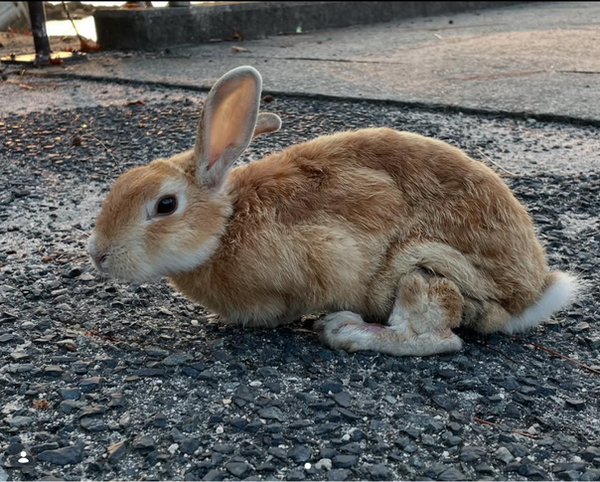
3/3/25
大久野島から蘭ちゃんを救出してこの8ヶ月で何が変わっただろう?
観光客の行動は何も変わらない。過去12年間、変わらなかった。置き餌も道路での餌やりも同じだ。
ウサギ達は今日も生野菜を与えられ病気になったり、追いかけられた挙句、踏み潰され骨折し、いずれの場合にも死に至るケースが少なくない。
大きく変わったのは島に定期的に通う、いわゆる一部の”ウサ活”と言われる人たちの行動だろう。
医療目的の連れ出しに対する反対者によるオンライン誹謗中傷は止むことはなく、拉致犯、人殺し、詐欺、黒船、ウサギを盗んで繁殖ビジネスをしてる、など、その中傷キャンペーンは学校のイジメより悪質でSNSの小細工を駆使し、激化していった。ニセ情報を投稿し反論できないよう設定したり、返信させないようにしてるのは自分なのに質問に答えないと批判したり。
SNSで読む情報は自分で検証しない限り何が真実なのかわからない事を強調したい。
過去にもあった気にいらない人間の島からの実質的締め出し。大人による陰湿なイジメが存在する、まるでどこかの村のようである。
今回の滞在では、複数人に見張られているのが明らかであり、一種、異様な雰囲気を醸し出していた。
医療目的の連れ出しに賛成するウサ活達にも精神的抑圧を与え、緘口令を敷いて、病傷のウサギの隠蔽を図る。そして新しいウサ活への洗脳活動。ウサギを愛してるという人間による卑劣きわまりない行動の数々。
反対者はSNSで仕事のように私達への誹謗中傷を続ける事で自分達の遊び場である大久野島を守ろうとしているのだろう。肝心のウサギはどうなるの?
ウサギを助けるべく、環境省や竹原市に効果的に交渉することができるのは島に通い続ける大久野島の現実を知っている人だけなのに妨害などに無駄な時間を費やすべきではないはずだ。
私たちは、多くのウサギが病気や怪我をしている事実と、観光目的の為に搾取されるウサギの保護治療がされてない事実を世界中に周知し続けようと思う。
何もしなければ何も変わらない。
What changed in the last 8 months since Ran chan was rescued?
Tourists’ behavior did not change. Nothing changed in the last 12 years.
They feed raw vegetables and make them sick. They chase rabbits, step on them causing injuries. All these rabbits ultimately died.
What changed is behavior by specific people who regularly visit this island, called “usa katsu”
(People involved in caring for rabbits)
Slanders by these people involved name calling such as North Korean abductor, killer, fraud, black ship (referring to Commodore Perry from USA), use of abducted rabbits for selling rabbits. This smear campaign was far worse than bullying in schools and used SNS for manipulation. They post fake info about us and change setting not to allow us to make comments. They ask us questions and criticize we don’t even answer knowing we can’t. You will never know what’s truth unless you can validate the truth yourself.
Spiteful bullying out of the island reminds me of village ostracism.
We were watched by multiple people during our stay and created a bizarre scene.
They enforce gag order to other pro-rescue “usa katsu” by psychological pressure and concealed sick and injured rabbits. Brainwashing new “usa katsu”.All these sneaky moves done by people with love for rabbits.
They think they can protect their playground by destroying us. What about rabbits?
They should be negotiating with the Ministry of Environment and Takehara city to make changes for these rabbits instead of blocking us from rescue attempts.
We will continue our efforts for awareness of this exploitation of rabbits and no care in spite of sickness and injuries.
No efforts, no change.

1/2/25
野生の動物に一切干渉すべきでないという考えを持つ人達は存在します。それは人間が関わることによりその生態系が悪影響を受けると信じていて、その考えを持つ人達は当然、餌もやらないし、怪我をしていても助けたりもしません。野生は野生のままに、という考え方です。
けれど、大久野島に来るほとんどの人達はその部類には入っておらず、水や餌をやり続けられてます。 水や餌を与えるという事は、ウサギに元気に生きてほしいという気持ちの表れではないでしょうか?
そこにはこのウサギ達の特殊な歴史も絡んでいると思われます。この島に捨てられたうさぎを祖先に持つ大久野島のウサギ達は、本来の野生種ではなく人災、天敵、環境により病気になったり、怪我をすることが少なくありません。多くの動物がそうであるように、ウサギも病気や怪我をすると仲間から弾かれ、その結果、死に至ることも多々あります。
助けられる命を目の前にした時… 島のウサギだからしょうがないと諦める方が殆どなのはとても残念です。 助けてあげられるなら助けてあげてほしい…と私は人として強く願います。元々無理な環境の中で野生ではない種でありながら懸命に生きているからです。
環境省も保護治療を目的として島から連れ出す事を例外として容認しています。蘭ちゃんや他のウサギ達はそのおかげで救出に至りました。ただどのウサギも実際より病状は重く、救出された風凛ちゃんや風流々(チーキー)ちゃんは既に手遅れだった事は悔やまれます。
それでも助かった命も存在し、今生き生きとその命は輝いています。生きて欲しいと願う皆さんの思いが寄付となり高度な医療を受けられたのです。
助かるかもしれない命、苦しんでいる命にセカンドチャンスを上げて下さい。
There are folks who strongly believe in not interfering with life of wild animals because they believe interference may result in disruption in ecosystem. These people do not feed wild life and do not rescue wild animals. That is the idea of ‘let the nature be nature’.
However, most people who come to Ohkunoshima don’t fit in this category. They provide water and food, which clearly indicates they deeply care about them.
These rabbits are offspring of house rabbits dumped many years ago and they often get sick/injured due to accidents by humans, predators and environment of the island. Just like other animals in the wild, sick/injured ones get ousted from their groups and sometimes result in death.
It’s such a shame most people give up the idea of saving these rabbits thinking they belong to the island. I really hope rabbits who are in desperate need will be rescued as they are not true wild rabbits who are better equipped to live in the wild.
The Ministry of Environment gave “go ahead” for medical treatment as an exception for “no rabbits off the island” and Ran chan and other rabbits were rescued. All of them had more serious conditions and it was too late to save Purin and Pururu(Cheeky).
But there are rabbits who made full recovery and living happily today. Your donation with best hope for their welfare made it possible to provide advanced medical care. Please give rabbits who are suffering a second chance in life.
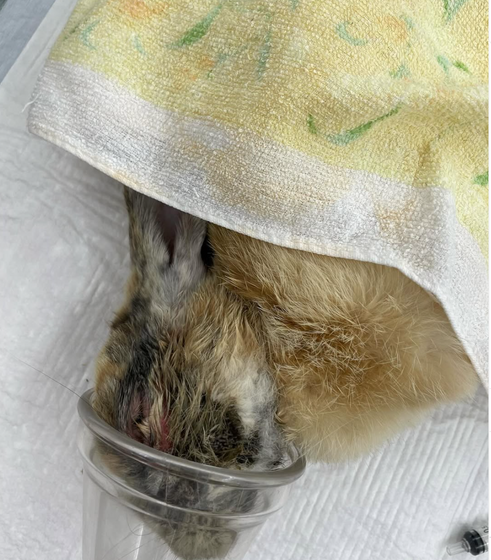

9/27/24
私の兄は医者でした。勤務中に院内感染でコロナにかかり肺繊維症を発症し1年の闘病後亡くなりました。この病気は治るものではなく余命も非常に短いものです。
機械で酸素濃度をあげてもいつも溺れているような感覚で、苦しくて苦しくて息をする事以外には何も考えられない、とまだ喋れる時にそう言っていました。何百、何千という患者の死に向き合って十分わかっていると思った筈の患者の苦しみは自分がその立場になった時、初めて実感した耐えがたい苦しみだったようです。安楽死を望んでいましたが聞き入れてもらえず、オムツの寝たきり状態になり人間の尊厳を失った気持ちのまま、最後まで苦しんで亡くなっていきました。
私は6月初めにビジターセンターの前で痙攣してのたうち回っているウサギを見つけました。そのウサギは見る見るうちに悪くなっていき食べる事も飲む事もできず、亡くなるまでそう時間はかからないと思える程でした。箱に入れて人目につかないようビジターセンターの横を目隠ししておきました。ところが翌日、既に発見から27時間以上経っているのに生きてました。苦しんでるのは明らかでこのままにはしておけないと私達は新幹線に乗って日曜日に開いている動物病院に連れて行きました。電車の中でも状況は更に悪くなって顔からウジが湧き出し、私は指でそれを取り除いてウサギの目に入らないようにしました。病院の先生は大久野島のウサギという事でやや冷ややかだった印象を受けました。既に瀕死の状態で入院も拒否され非常に簡単な処置のみでした。ウサギはそれでも生きていて私は回復の見込みがないなら安楽死させてもらえないか聞くと先生はここに連れてくるということは何とか全てやってあげようと思ってるのだろう。安楽死させるなら島にそのまま置いてきたら良かったんじゃないか、と言われました。私の頭の中には瀕死でも生きてる状態でカラスやイノシシに食べられる光景が目に浮かびました。そっちの方が残酷だと思いました。非人道的だと感じました。結局そのウサギは苦しみながら数時間後亡くなりました。
私は何故か兄とこのウサギの状況がダブって見えてるような感覚に落ち入りました。動物が苦しんでいて回復が全く期待されない時に苦しみから解き放つことは人道的だと認識されているアメリカと日本の状況は大きく違うとわかったのもこの時でした。
My older brother was a doctor. While on duty, he contracted COVID-19 through an in-hospital infection, developed pulmonary fibrosis, and passed away after a year-long battle with the illness. This disease is incurable, and the prognosis for survival is extremely short.
Even with the aid of machines to boost his oxygen levels, he told me—while he was still able to speak—that he constantly felt as if he were drowning; the agony was so intense that he could think of nothing else but the struggle to breathe. He had faced the deaths of hundreds, perhaps thousands, of patients throughout his career and surely believed he understood their suffering well enough; yet, it seems that the anguish he experienced when he found himself in their shoes was an unbearable torment he truly grasped for the very first time. He wished to be euthanized, but his request was denied; he eventually became bedridden and incontinent, and—feeling stripped of his human dignity—he continued to suffer until the very end, when he finally passed away.
In early June, I discovered a rabbit in front of the visitor center, writhing in convulsions. Its condition deteriorated rapidly before my eyes; it could neither eat nor drink, and it appeared to be on the verge of death—it seemed it would not last much longer. I placed it in a box and set it aside next to the visitor center, shielded from public view. However, the next day—more than 27 hours after I had first found it—it was still alive. It was clearly suffering, and feeling that I could not simply leave it there, my husband and I boarded a Shinkansen bullet train to take it to an animal hospital that was open on a Sunday. During the train ride, its condition worsened further; maggots began to emerge from its face, and I had to use my fingers to pick them off to prevent them from getting into its eyes. I got the distinct impression that the veterinarian treated us somewhat coldly, perhaps because the patient in question was a rabbit from Okunoshima Island. The animal was already in a critical, near-death state; the hospital refused to admit it for inpatient care, and it received only very basic, minimal treatment. Yet, the rabbit clung to life. I asked the vet, "If there is no hope for recovery, could you please perform euthanasia?" The vet replied, "The fact that you brought it all the way here suggests that you want to do everything possible to save it. If you simply wanted to have it euthanized, wouldn't it have been better to just leave it back on the island?" At that moment, a horrific image flashed through my mind: the rabbit—still alive, despite being on the brink of death—being devoured by crows or wild boars. I felt, with absolute certainty, that *that* would have been the far more cruel fate. I felt it was inhumane. In the end, the rabbit died several hours later, having suffered throughout.
For some reason, I found myself overcome by a sensation that the rabbit’s plight was eerily mirroring that of my brother. It was at that moment that I realized just how vast the difference is between the situation in the United States—where relieving an animal of its suffering when recovery is hopeless is recognized as a humane act—and the situation in Japan.
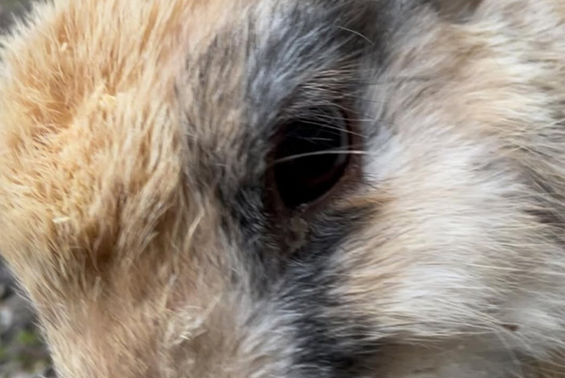
9/12/24
大久野島はウサギと触れ合えるという事で多くの観光客が訪れます。特に、土日、連休時にはウサギの数より人の数の方が多い時もあります。その結果、生野菜のやり過ぎで鬱滞を起こすウサギが休み明けに発見される事が少なくありません。また、ウサギにエサをやりたくて追い回して間違えて踏んだり、抱っこして落とした結果、重篤な怪我を負わせることもあります。島では一旦怪我、病気になってもケアされる場所がありません。蘭風ちゃん(耳に大きな腫瘍のあったウサギ)が島から救出された事をきっかけに今後も治療が必要なウサギは島外治療にかけてあげたいと思います。現在、治療目的で島外に連れ出す事ができますが治療後、島に戻る事は許されていません。 つまり終生保護先の確保なしに島から連れ出して病院に行く事もできないという状況です。そこで大久野島のウサギの終生保護をしてもよいという方々を探しています。DMにてご連絡ください。拡散も合わせてよろしくお願い致します。
Many tourists visit Ohkunoshima (rabbit island) because of rabbits. The number of visitors often exceed the number of rabbits on weekends and holidays. As a result, many rabbits suffer from injuries and sickness but no place to treat these rabbits on the island. After Ranpu chan(rabbit with huge tumor on the ear) was rescued from island, we’d like to continue to save rabbits that need help. Currently, rabbits are not allowed to come back to island after medical treatment and that is preventing efforts to save them. Please send me a DM if you’re interested in adopting Ohkunoshima rabbits. Please feel free to spread the word. Thank you.
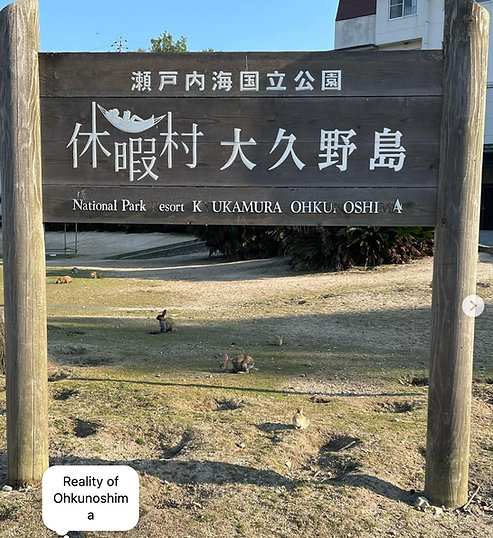

6/14/24
大久野島にウサギがいなくなる日はやって来ます.それはイノシシやカラスやトンビやネズミのせいではありません。
人間のせいです。人間が元凶なのです。もちろんこれらの動物はウサギを捕食します。捕食できる理由は人間がウサギに生野菜を食べさせすぎ(特に子うさぎ)お腹にガスが溜まり痛みで動けなくなり、その結果天敵がいとも簡単に捕食をするからです。人間が誤ってウサギを踏んで(特に子供)ウサギが骨折することで動けなくなる事もあります.加えて島のウサギはあらゆる感染症にかかっています。平均寿命は1年、せいぜい2年といったところでしょう。子うさぎは簡単に捕食され大人のウサギは病気で死んでゆきます。これがウサギの数が激減する理由です。
ウサギが減るのを止めるには子うさぎが無事育つ事が重要なのです。それなのにどうしてキャベツやにんじんを大量に持って来て子うさぎにあげるんですか?必ず死にます。やめてください。そして子供がやみくもに走り回らないようコントロールしてください。そうでないと島からウサギが消える日はやってきます。
(1枚目の看板の下にいるのは2枚目の子うさぎです。すでににお腹は腫れおそらく週末を生き抜くことはできないでしょう)
The day will eventually come when there are no longer any rabbits left on Okunoshima. This will not be due to wild boars, crows, black kites, or rats.
It will be because of humans. Humans are the root cause. Of course, these animals do prey on the rabbits. However, the reason they are able to prey on them is that humans feed the rabbits—especially the young ones—excessive amounts of raw vegetables; this causes gas to build up in their stomachs, leaving them immobilized by pain, and as a result, their natural predators can catch them with ease. There are also instances where humans accidentally step on the rabbits—particularly children—causing fractures that render the rabbits unable to move. Furthermore, the rabbits on the island are afflicted with a wide variety of infectious diseases. Their average lifespan is a mere one year—two years at most. The young rabbits are easily picked off by predators, while the adults succumb to illness. This is the reason why the rabbit population is plummeting.
To halt this decline, it is crucial that the young rabbits are able to grow up safely. Yet, why do people continue to bring large quantities of cabbage and carrots to feed to the young rabbits? It will inevitably lead to their deaths. Please stop doing this. Additionally, please supervise your children to ensure they do not run around blindly. If you do not, the day will surely come when the rabbits vanish from this island forever.
(The rabbit pictured beneath the first signboard is the same young rabbit shown in the second photo. Its abdomen is already distended, and it is unlikely to survive through the weekend.)

9/25/23
It has been 10 years since we started to come to Okunoshma. I still can not forget how excited I was to see many rabbits run up to me during our first visit to this island. I just could not realize how things could deteriorate this bad in 10 years.
People poking rabbit nests with tree branches. People climbing walls where rabbit nests are and destroying them potentially killing babies. People reaching hands into rabbit nests hoping to catch them. When rabbits don’t eat the food shoved at their nose, people get frustrated and start hitting and kicking them. People chase rabbits and end up stepping on them.
Vast majority are kids doing these things while their parents ignore their behaviors. Parents are okay with kids actions as long as they have a good time.
There’s no control on the island to protect rabbits. No park rangers or people with authority. The island has only volunteers like us who tell people not to mistreat rabbits and get yelled back if we say anything.
Matsuzaka rabbit did not have to die.
He was chased and cornered by kids into the bushes where he lived, where he got stepped on and his hips were broken.
Matsuzaka was 5 years old, a very popular rabbit but not as agile as he used to be and probably could not escape this persistent chase by kids. Michael witnessed multiple chases on Matsuzaka and other rabbits and told people to stop.
We have come to the island many times over the years to help sick and injured rabbits. We explained to people what to do and not to do many times. Hoping that with education, people will change but nothing changed. People still chase rabbits and over feed them and rabbits end up being injured, sick and ultimately die. Even we could save one rabbit, three still died. We realized that our efforts had no impact. As Michael said, it's like trying to put out a fire in a high-rise building with a short household hose.
While many companies make profits off the rabbits, rabbits are paying with their lives. Not one yen goes to the rabbits or their care. Injured or sick rabbits as a result of human cruelty are not rescued or treated. They simply end up dying within days if not overnight. The only thing that is protected are businesses who exploites rabbits. Okunoshima became an island of animal abuse. This should never be tolerated.
I hear the rabbits voices screaming every day "Protect Me, Help Me!”
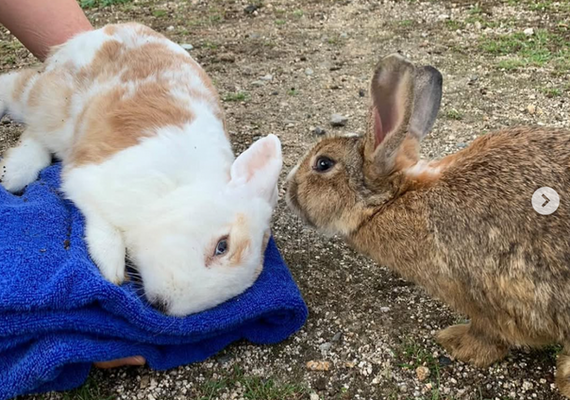
9/25/23
大久野島に来るようになって10年。
初めて来た時の感動は今も忘れられない。まさか10年後に島の惨状がここまで酷くなるとは予想もしていなかった。
ウサギ見たさに木の枝で巣穴を掻き回し、巣穴に登り手を突っ込んでウサギを捕まえようとする人。思うようにならないとフラストレーションからウサギを叩いたり蹴っ飛ばす人。追い回す過程で踏み潰してしまう人。ほとんどが子供の仕業ではあるがその子供を注意することもなく見て見ぬふりをする親。
松坂さんは死ななくてもよかった。囲い込み狩のように7-8人の子供に徐々に追い詰められ自分の住む茂みの中まで踏み込まれおそらく踏まれて腰の骨を折ったであろう。今までに何度も経験してきたウサギにとっては人間による攻撃とも言える事件は5歳になった今では昔のようにすり抜けることもできなかっただろう。何度も松坂さんへの囲い込み攻撃を目のあたりにしたマイケルは文字通り怒鳴り散らしたに違いない。
ウサギを助けたい、何かが変わるのではと何度も多くの人々を注意したりウサギを助けて欲しいとお願いしてきたが結果的に何も変わらなかった。1羽助けることができても3羽死んでいく現実。自分達のやってきた事は自己満足以外のものではなく問題の解決には繋がっていない事を自覚した。 マイケル曰く、高層ビルの火災を家庭の短いホースで消そうとしてるようなものだと。
ウサギ達は金儲けの為、人間の食い物にされ保護されることは決してない。ウサギは保護しなくても商売は守らなければという資本主義を盾にする人間。大久野島は動物虐待の島だ。こんなことが許されるべきでは決してないはずだ。
今日もウサギ達の声が聞こえる。
“守ってよ。助けてよ。”
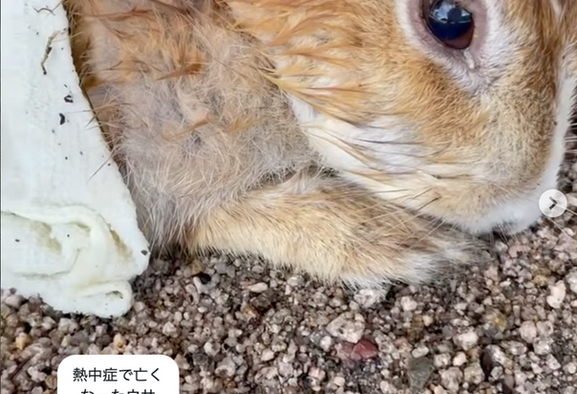
2023年9月9日
このウサギは去年熱中症で亡くなったウサギのうちの1羽です。発見から4時間足らずで努力の甲斐なくあっけなく逝ってしまいました。
異常な暑さが予想される現在、大久野島のウサギたちは今までにない過酷な状況に置かれることとなり熱中症による死亡は免れないでしょう。彼らを少しでも助けたいと思う方は、この夏、島を訪れ給水に是非ご協力お願い致します。
タオルに冷たい水を浸して絞り、耳の内側を冷やしたり身体にかけてあげて下さい。自販機の冷たい飲み物を身体の横に置いたりするだけでも随分違います。皆様のご協力を心よりお願い申し上げます。
9/9/23
This was one of the rabbits who suffered from heat stroke and passed away less than 4 hours after she was found.
These rabbits will face abnormally hot summer this year, something they never experienced before. Many will most likely to die. If you want to help them, please visit the island and help to provide water for them. If you see a rabbit struggling from heat stroke, place cold towel inside ear and/or over their body. Placing cold drink from vending machine by their bodies helps as well. Thank you for your cooperation and helping save these rabbits.


2022年9月
ザックリちゃんと名付けたウサギは大怪我をして仲間のウサギ達から逃げるようにキャンプ受付ビルの後ろに隠れていました。発見時にはすでに痩せ細っていて怪我の痛みで食べるのも極端に遅く1日数時間おきに隠れている所にごはんやビタミンをあげに通ったのを昨日のことのように覚えています。私達が帰った後も皆さんに見守られ4か月近く生きることができました。最後はお尻に膿瘍が発生し行方がわからなくなりました。今だったらすぐにでも病院に連れて行ってあげることができたかな。 いつまでも忘れないよ、ザックリちゃん!
September, 2022
A rabbit, we named Zakkuri, was severely injured (lower part of his body had deep gash). He no longer could eat with other rabbits and was hiding behind unused building. He was already skinny when he was found and I remember going to where he was hiding every few hours to give him food, water & vitamin. Even after we had to leave the island, other volunteers kept watching over him and took care of him. He got to live close to 4 months after devastating injury. At the end, he developed abscess around his butt area and went missing one day. If this were today, I bet we could take him to a vet for treatment. Zakkuri, you will always be remembered.

10/4/25
他の誰もが決して投稿しないウサギの命の終わり方。
これが大久野島だ。悲しい現実。亡くなる前日。
貴方ならこうなる前に助けてあげますか?
This is the type of pic/video no one else posts.
This is Ohkunoshima. Sad truth. The day before she passed away. Are you going to rescue this rabbit before it gets to be in this condition?